All over the world there is sh*t that divides people. There are the big divisive subjects: sex, religion, racism, politics, culture. The ones which, arguably, lead to the biggest problems: terrorism, fear, injustice, inequality. In the lesser divisions, generally fought no less fervently, one could list sport or social media, school systems, sneaker brands; although one might say these fall under the larger headings.
However, something closer to my heart has struck in me a pang of sadness, coupled with unwelcome bouts of judginess, and set me down this morning to write: the polarisation of food.
I’ve followed various threads of discussion on Facebook this week coming from a group of South Africans living in France (and vice versa). I’ve written before of how we collectively lament the absence of various ingrediants and snacks from the motherland, so this feels like I’m repeating myself. Nevertheless, here goes.
I received a reply to a comment I had inserted regarding things I miss from home (namely decent tea), a comment in which, in particularly verbose style, I had written there is almost nothing that a Saffa could miss when they come to France. A French Saffa misunderstood me, and (I thought quite arrogantly) implied that the French variety of foods is superior to anything found in South Africa. Before I could reply in with a scathing riposte, the comment had been deleted with an admission and apology that she had misunderstood me. Yet, the fact that she claimed that French food is better than anything back in South Africa still stuck with me.
A day or 2 later, a lighthearted post was shared:
“I want to move to France, so that I can start afresh.”
2 Weeks later…
“Where can I buy All Gold, Fritos, Aromat and Omo washing powder?”
All immigrants can relate to this. At some point, no matter how much you love or hate your motherland, there WILL be something that you’ll miss. Guaranteed and certified. And it’s very unlikely to be just one thing.
Nostalgia’s a bitch; you’ll have been out of the country for 30 years, but the smell of Stoney Ginger Beer and the crackle of a luminous packet of Nicknaks will have your senses alert for those dusty winter evenings out in the bush, the golden sun sinking behind everlasting savanna, the first star that is actually Venus glistening before the Southern Cross makes her comfortingly familiar heavenly appearance.
Yes yes, rose tinted glasses and nostalgia, my life forever.
65 comments later, it was interesting to read everyone’s experiences and thoughts, ranging from very talented folk who make everything themselves (has anybody got a recipe for Niknaks!?) to the French folk living in South Africa who admitted they’re on an eternal hunt for a decent Camembert and the complete absence of a genuine baguette or a half buttery croissant.
I sat reading through so many vastly differing opinions, and whilst nobody proffered further volatile argument either for or against French cuisine over South African cooking, it was indeed still a little bit polarising.
Apparently Marie Biscuits and Tennis Biscuits are bland and tasteless. But damn, when last did you eat a Prince biscuit?And how long I waited to get a steady supply of Salt and Vinegar crisps in Strasbourg? I just don’t get those awful peanut flavoured puffed maize crisps.
Oops, Do you see how easy it is to be scathing in the face of an insult to something that appeals to your childhood memories?
I have a Belgian friend who reminisces about breaking off wedges of cooking chocolate and squirreling them inside a baguette for their afternoon goûter – the mid-afternoon snack time to sustain kids between lunch and dinner at 7. General grazing (a la South African style) through the pantry for snacks all day long in hugely unacceptable here.
To be fair, the French are luckier than me in this regard.
Me, circa the 80s, on the farm: “Mom, I’m huuuungry!”
Mom’s reply? “There are apples in the pantry.”
Sweet heaven above, how much of a treat would a piece of cooking chocolate in a baguette have been in the 1980s?
Do I think the French food is better than South African food, despite peanut flavoured maize chips and literally MILLIONS of little individual tubs of yoghurt in various different flavours, with or without pieces, served as dessert or breakfast?
That would be an essay bordering on a thesis were I to knuckle down to express my arguments and feelings in full. But, at the end of it, I likely wouldn’t be able to call an outright winner as to which country has it best.
On one hand, the French culinary world is as old as Europe and quite deeply intertwined with locally grown produce. The South African culinary landscape is a more literal melting pot than in the way that phrase is normally used. It is a food culture based on centuries of colonial influence, dishes made, remembered and passed down from varied and far flung reaches (including French), it really only started to solidify as recently as the 1800s, then grew up in the vastly different geographical climate of Africa, and thus locally grown produce was significantly less instrumental in the fundamental development of many historical dishes, which simply moved over from elsewhere.
I also believe the French are more caught up in the traditions imposed upon them through their years of classic recipes. Whilst this makes their food recognisable, familiar and generally good, South Africans don’t follow the same set of unwritten rules, so we do put those dried apricots on a beef sosatie, and we will marinade our venison in red wine with garlic if the wind happens to be blowing in one direction, if that’s what we want.
South African food in restaurants is adventurous, brazenly different, and I for one love using multiple layers in a dish. I find the French are different in their approach, and tend to stick to one main ingrediant. For example, Christmas dinner as the home of a Strasbourg family would be oysters as an entrée, followed by Foie Gras and (store bought) toasts, then roast lamb and spaetzle for main course. A following course would be a bowl of lettuce, then dessert. And finally, your anticipated shot of espresso. Just how different Christmas down south in Toulon or across west in Saint Malo would be might prove an interesting and delicious research project.
I am grown up enough to know that I may need to let go of South African snacks. I chose to move here, and have fully embraced all the French culinary world has to offer. There are great legs of smoked ham to replace biltong, I actually eat fish and cabbage now, and my recent craving is the Heritage Tomatoes of summer. Where would I be without fromage blanc (or specifically, bibelekaes) and créme fràiche? But, dear French cheesemaker, though I know Cheddar is quite specifically English, is there any way you can recreate a decent variety that is similar? I NEEED all the cheese, right?

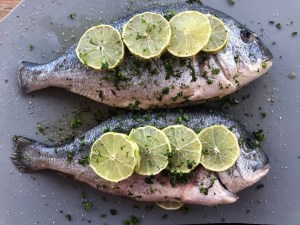

As I sit here analysing the differences, I realise that my musings seems to prove that French ingredients are better. However, two things ought to be observed: there is also some French food that is awful; and here in the city I live in, you rarely get a decent plate of food for the standard lunch offer (a very common practice at lunch) – in the opinion of this chef anyway. But it’s the same back home if you were to walk across the road to the food truck cooking over a small gas burner. It’s about perspective, and what you need and take away from life.
In hindsight, I may have overthought the discussion but, sitting here on my kitchen terrace writing and listening to classical music while watching the rain settle, writing it all down has assisted considerably in getting me through the funk that has been weighing on me this week, the last week of summer.
Thank you for listening, but I am curious, do you have any thoughts about this eassy?
PS: here’s a quick menu suggestion for your next Sunday brunch:

I had bought some cheap (and nasty) baguettes this week to make my own breadcrumbs, and had some spare, so for a Sunday brunch, I whipped up some cinnamon pain perdu, buttery caramelised prunes and realised I could top it off with crème fraîche because I live in France and we have it available!
• 1 day-old baguette, sliced into 3cm wedges
• 3 eggs, beaten
• 120ml milk
• 3ml ground cinnamon
• pinch salt
• 8 prunes
• 20ml sugar
• 30g butter
• 50g crème fraîche
Add milk, cinnamon to the beaten eggs. Dip and soak the sliced bread into the egg mixture, and place into a heated frying pan with a small amount of oil and butter. Cook one side until the bread is brown, flip over and cook the other side, until the bread is no longer soggy.
In a separate pot, add 30g butter, 20ml sugar and heat gently. Add the quartered prunes and cook for 3 -5 minutes until the prunes are soft and caramelised. Remove from the pot and place over the cooked French toast. To finish, add a table spoon of crème fraîche, eat immediately.
 Pinot, Bretzels, and Cathedrals