I love a road trip. A winding road, a falling valley, a climbing hill and a striking, towering mountain top, a moody sky or even just a bright blue expanse hovering above us. Road-side padstals (in South Africa, there’s nothing of that sort in Europe), the sun setting in my rear view mirror. Music.
Road trips are not everybody’s cup of tea, but we were a road trip family as kids because growing up in South Africa in the ’80’s and ’90’, flights away for a long weekend to a somewhat exotic destination were not fashionable, or even possible. (Unless you knew someone with a small plane to fly to Bazaruto, Moze, for an exotic white-beaches holiday. Or you could spend all your bonus or savings on a week in Mauritius.)
Even so, being the children of a dairy farmer who never took holidays, my first 12 years of an innocent youth only ever saw us road-tripping to Mom’s family farm in the Eastern Cape where the rolling hills and scrub-like veld lands are where Mom used to call home. Here we would see our Ouma and the cousins with whom we barely became friends with before we would part company again for another few seasons.
Even then, the 800km trip would happen only every 3 or 4 years for reasons I could never understand as a kid. An early morning start, we would set off at 5 in the morning, having been bundled into the car by Dad and would hit the road before the spring sun would rise. (We usually went for Easter, it was a good time for the life of a farmer to find 10 days off the seasonal routines.)
As the years passed, we would forgo a side-of-the-road picnic for a Wimpy breakfast in Kokstad and would usually stop for lunch Queenstown EC at the old majestic town-center hotel.
When we returned home, that old hotel would see us for breakfast, and Kokstad Wimpy for hamburger lunch. Either way, we would be at our destination around 3 in the afternoon, a days worth of driving. Over the years, that old hotel lost its majestic charm, but we had grown up and our holiday destinations had evolved to include undiscovered swathes of our beloved country from the safety of our Mercedes Benz.
When I was 12, Mom and Dad were invited to a wedding in Zimbabwe.
In February.
Less than a month after our school year had started. To this day, I’m not certain what prompted the parents to take us out of school, but they did, and we spent 14 days travelling up to the far northern side of that country, in our faithful red Merc. Aside from the holidays to see Ouma, we had never undertaken a journey of such magnitude, and from that year forward, we travelled somewhere during our winter school holidays.
I think that trip we undertook in Zimbabwe set me up for life.
Firstly, in those 14 days of travel, we only spent 2 nights in the same bed, aside from the weekend when we stayed with distant Carr cousins outside of Harare while Mom and Dad attended the wedding. For the rest, we toured, a la style de un Grand Tour: Pilgrims Rest, the Matopas, Bulawayo, Harare. We took a charter flight to Victoria Falls and Lake Kariba, back again to the car, and drove to Nyanga and later the Great Zimbabwe Ruins to return home through sultry and warm Warmbad, far northern Transvaal.
The second somewhat great revelation I had back in 1990 was hastened by the luxurious standards of hotels that Mom (or a travel agent anyway- it was the ’90’s after all) had booked us to stay in over those many summer nights. A magnificent old-style hotel group held several grand hotels in Zimbabwe at the time. As we alighted from the shuttle at the Victoria Falls Hotel, I stopped in my tracks and stared open-mouthed as the sight before me.
Grandiose in it’s magnificent white appearance, porte cochers, captivating lights, pillars and columns, mahogany reception desks of quiet respect with golden keys and darkened pigeon-hole boxes for messages. Sparkling blue swimming pools and lush green landscaped gardens. Bell boys, and room service. A breakfast menu where I could eat anything I wanted to, and I tried, I can promise you- liver and kidneys et al. I fell in love with food and hotels on that holiday, something that stayed with me and has been a path that has carried me throughout my life.
Are you even surprised that when I plan a holiday as an adult, I pull out a map of where we are heading to and armed with tantalising stories read in books, some Google and Instagram, (the sad demise that The Lonely Planet has been replaced with Trip Advisor, which is one app I stay away from), I plot a route of where I would like to stay, places I would like to see.
The need to take into account a budget, driving into European city centers and the endurance levels of my kids make the job just a little more challenging. Not to make mention of the Biggest Girl in our family, but how does one merge a journey complete with fighter planes, fast cars historical architecture and child friendly activities?
Let me be honest. This is not a travel blog.
At all.
As you can see, if I was a travel writer, there’s no chance I would be succinct and to the point with any sort of ease.
I’m really just so grateful to be able to get out of the ‘norm’ that I would wax lyrical about every experience, all the while desperately curtailing my personal feelings, that I would end up writing never ending essays with no definitive conclusion.
But you know how much I adore my camera right? I have so many photos, either the DSLR or my phone, I fear I have become somewhat annoying in my travails to capture the best light, the most natural smile, the memory worthy of placing on a wall.
Perhaps, then, it’s easier to write from the perspective of my lens, and let me take you through our 2021 summer holiday trip, complete with appropriate captions. That way, I can keep perspective right?
Mind you, some of these are ‘artsy’ and edited, and some just memories for us, so forgive me if this comes out as one unaesthetic mess.
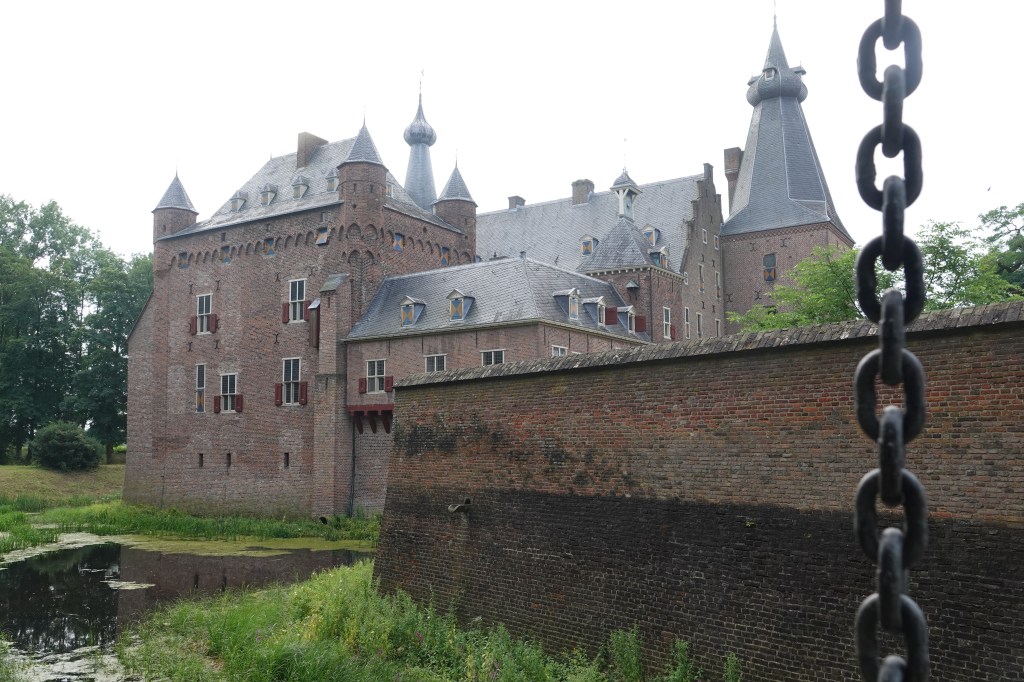

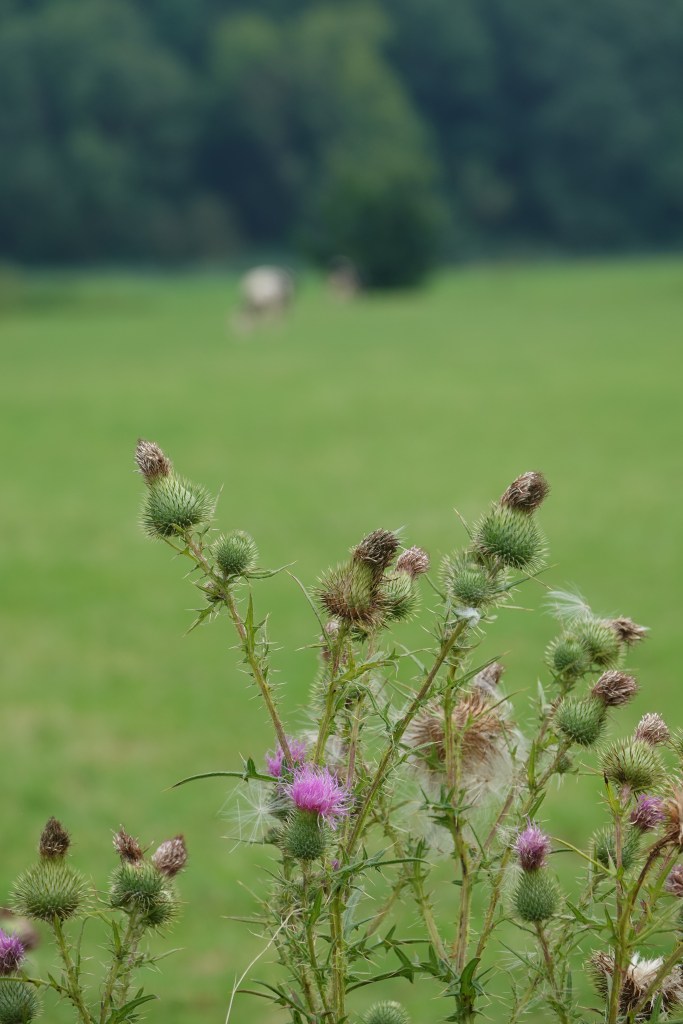
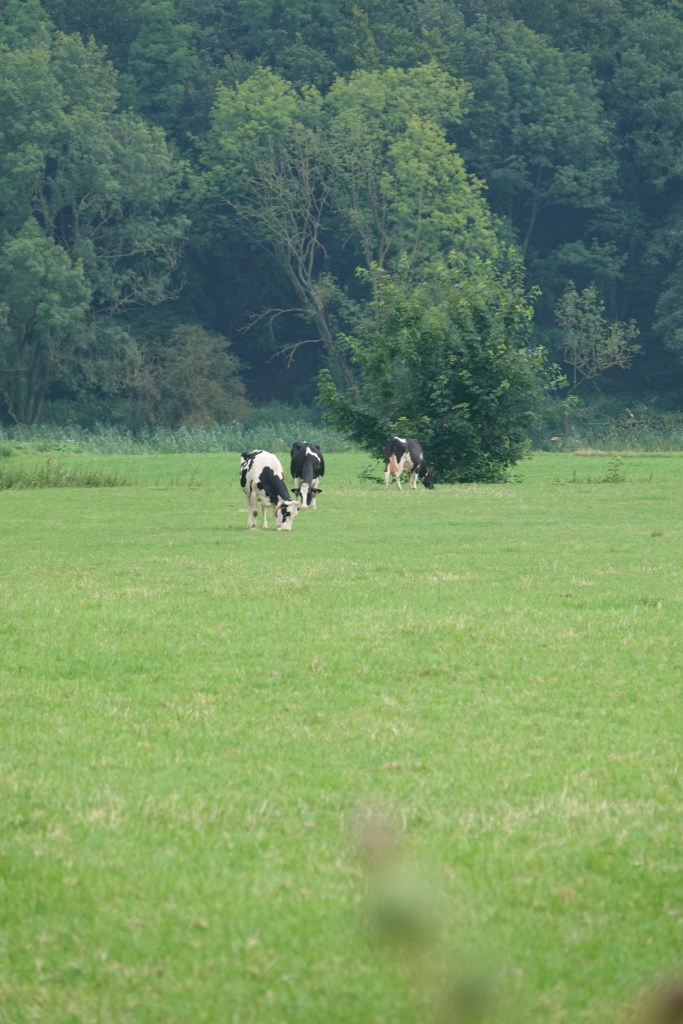

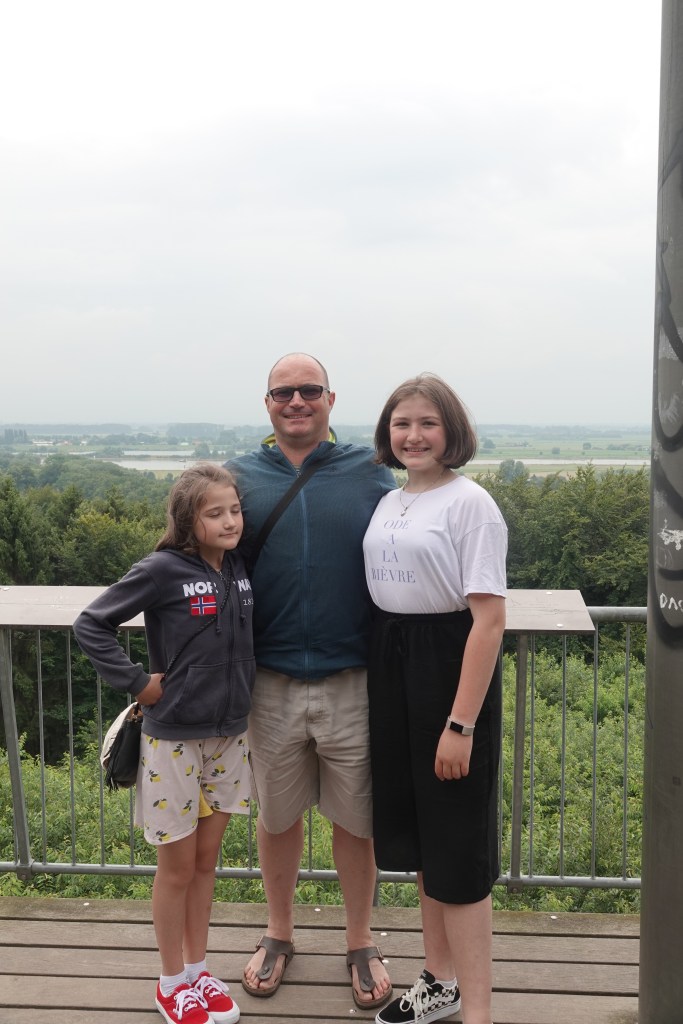
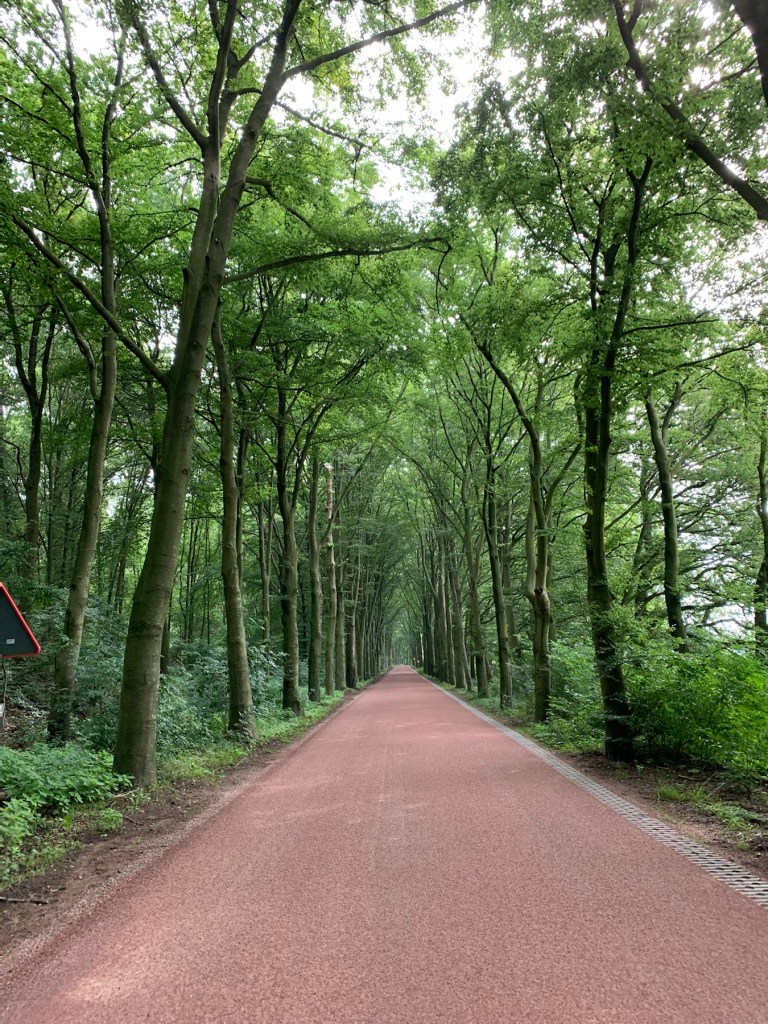

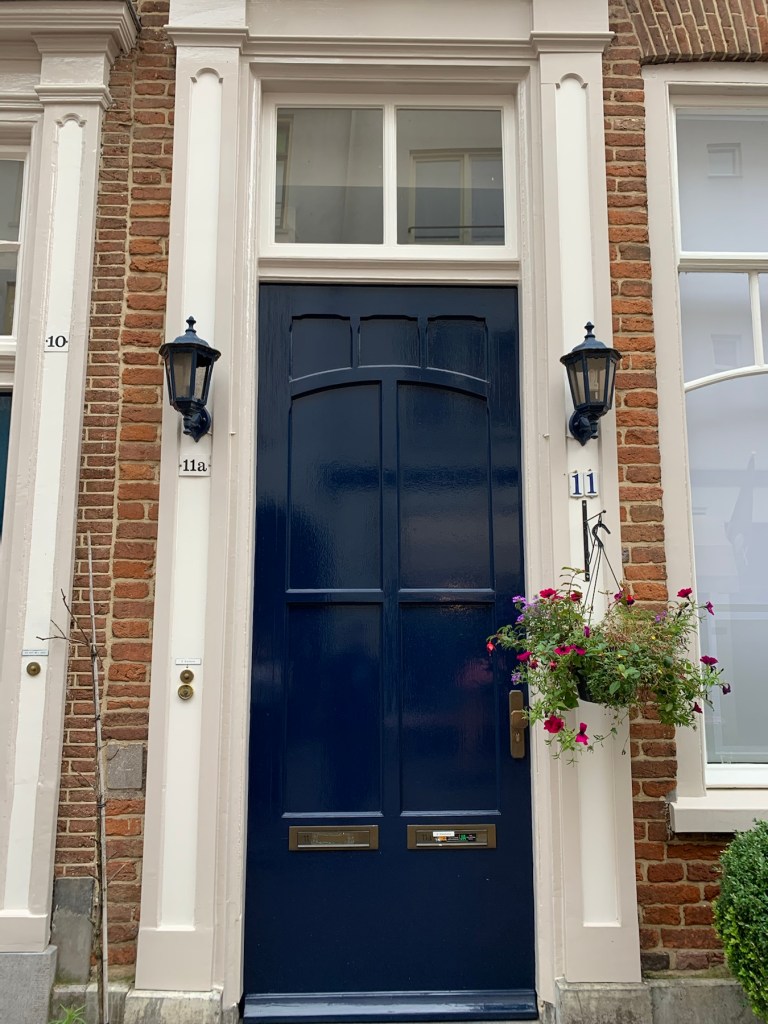


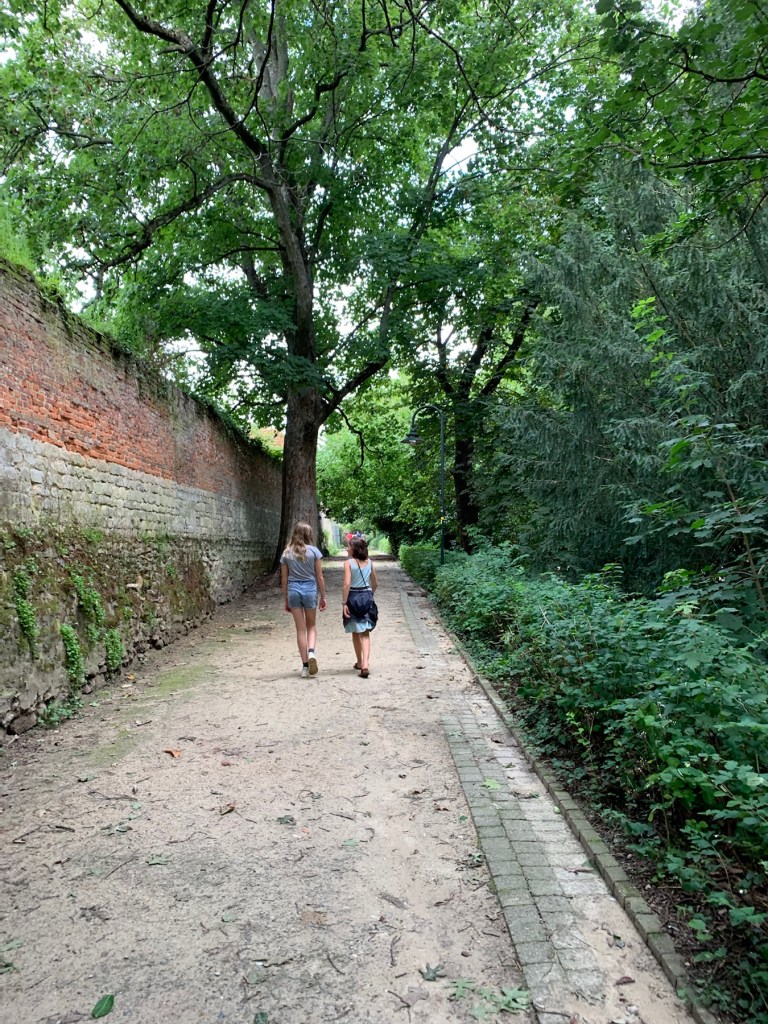
We spent 2 nights in the city of Arnhem where we attempted to get into the Doorwerth Castle. Unfortunately, having not realised that most Dutch tourist venues require an online reservation before you arrive, we weren’t able to get into the castle. Instead we were able to wander around the grounds which included a beautifully kept forest (that alley of red graveled road among the tall trees was just too beautiful), black and white cows grazing (happy Mommy & Beth) all the while at a little bit above 22 meters above sea level. Given we were the further-est from the Dutch coastline at this point, it really is a stark reminder that the Dutch had mastered the skill of holding back the waters, be it the North Sea, or various rivers.
The city center of Arnhem is beautiful and quaint. Much like any other European town centre, be it at the biggest church or palace, fantastic pedestrianisation has made it impossible to drive in the middle of towns. Shops and homes stand nestled tightly next to one another, doorways taller than anywhere we’ve ever seen, the buildings themselves jostle for natural light.
It was in Arnhem that I captured my absolutely favourite image this holiday- that of a decor shop, darkened in the entrance, but lit up at the back. At this age that I’m at, I have developed a taste for images of dark and light, anything that hosts an opposite I guess, because my other favourite image is of another shop that sold kitchenware, its trendy new plates and brilliant kitchenware adorning an almost ware-house wall, complete with unfinished plaster but the most magnificent skylight.
The historical part of Arnhem highlighting its efforts during the war was alas missed, but if you’re into WWII history from a military perspective, I would recommend a visit to Arnhem.
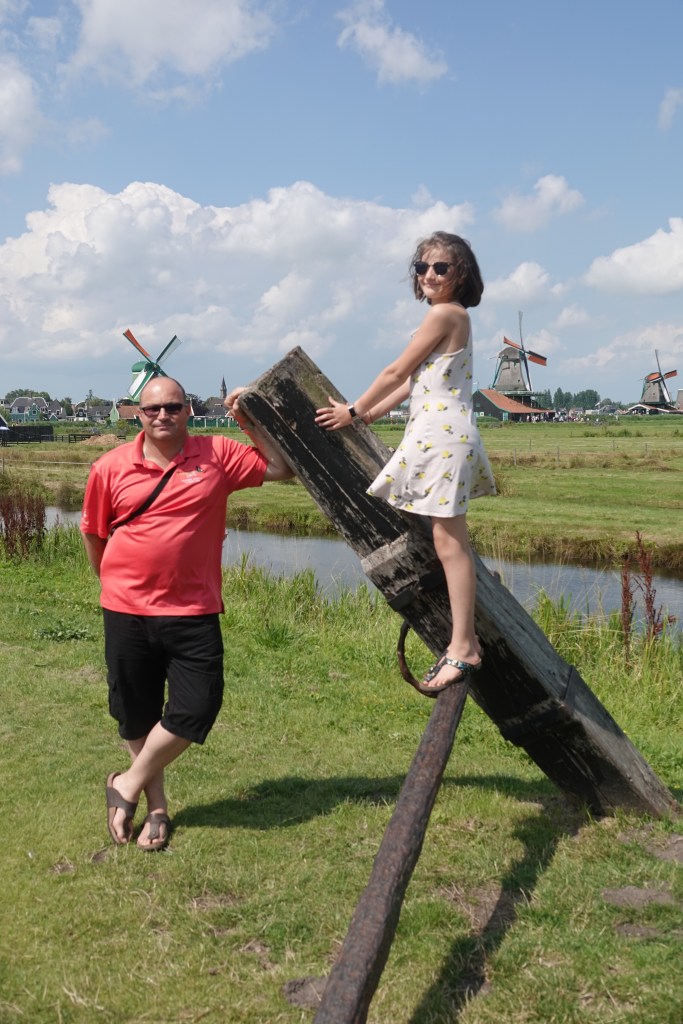
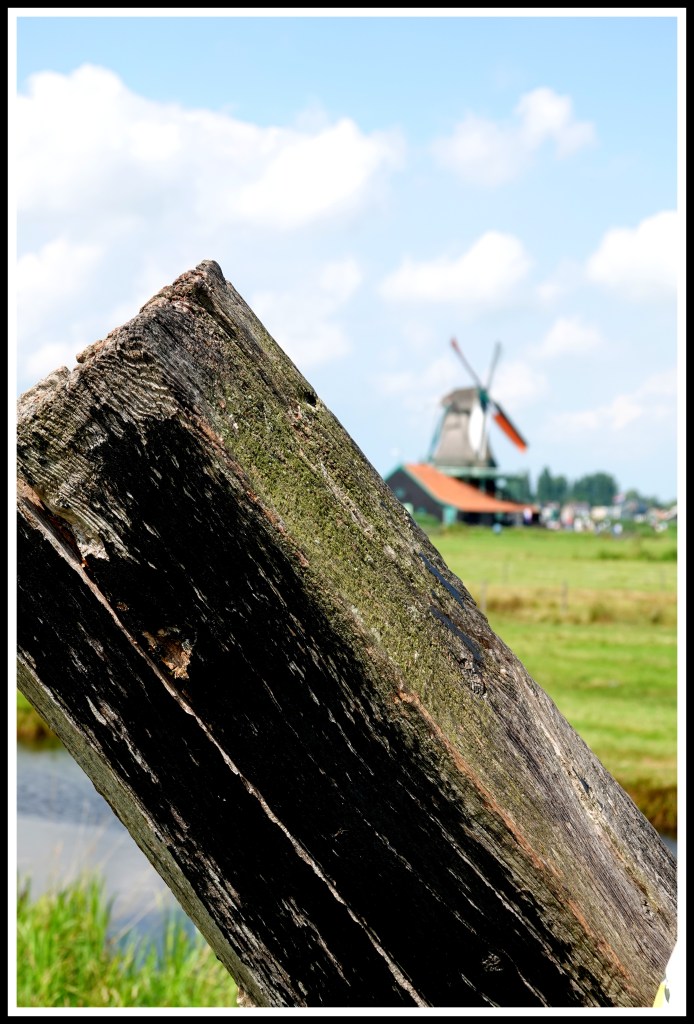
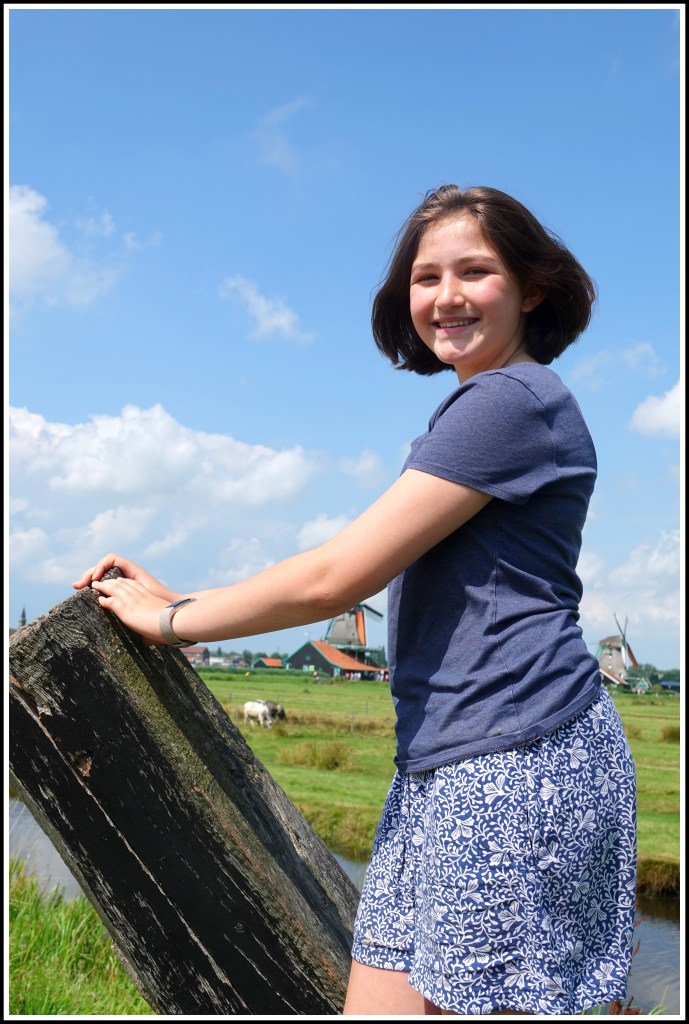
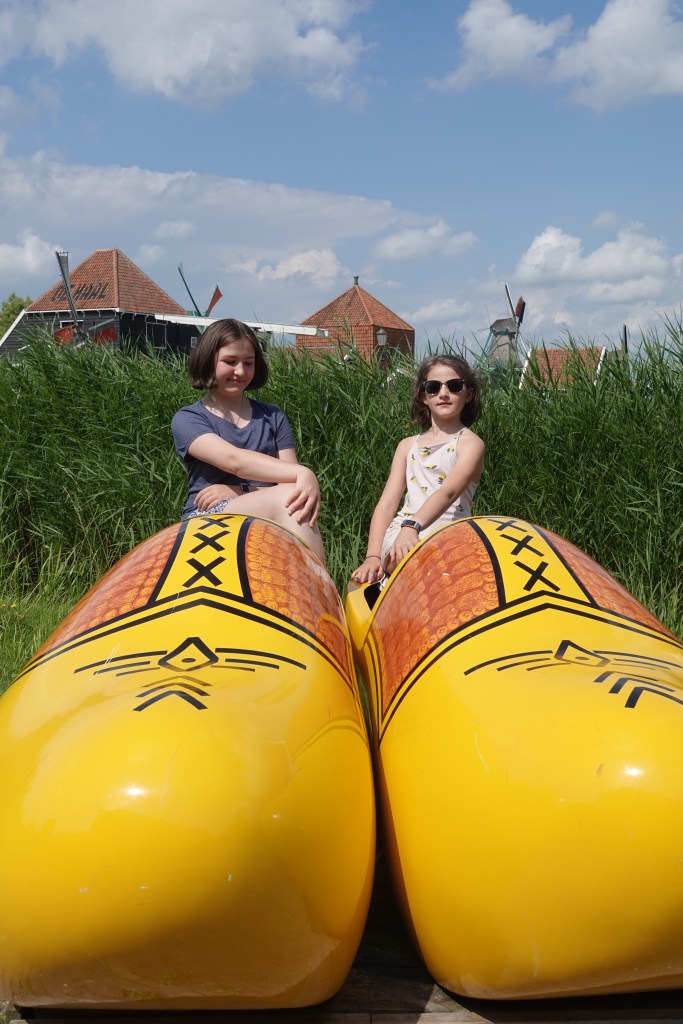
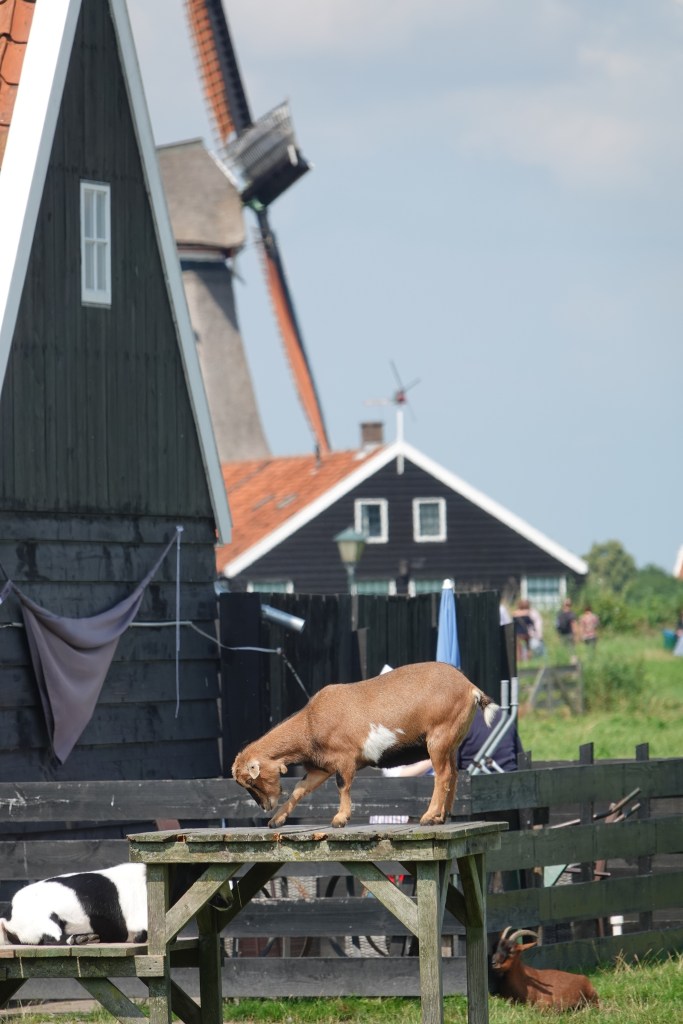


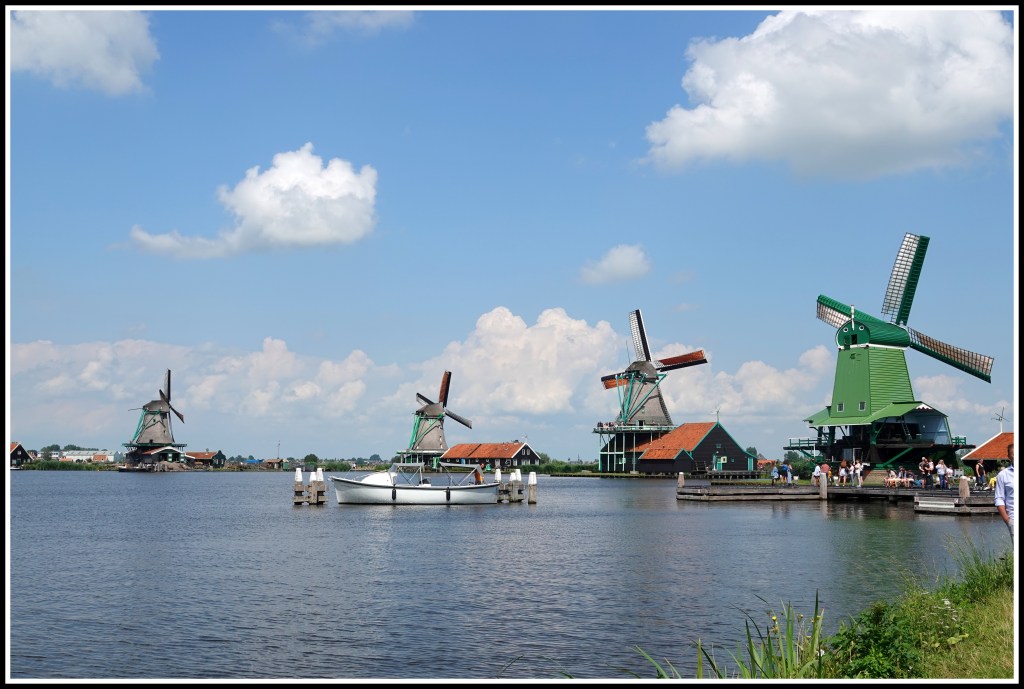

Hubby and kids were after some wooden clogs and we knew we could buy them here, having done just that 4 years ago on our first trip here. Zaanse Schans is an area in the Holland province on the Zaan River that is also home to historical working windmills.
Aside from being a big tourist destination, it also is home to windmills that date back to the 1500’s that still operate beyond the tourist attraction element. It’s free to enter the paved area, where you can buy cheese and other tourist trinkets (clogs), but should you wish to enter the working mills/museum mills, you’ll be required to have a museum pass, bought at the tourist info center.






Another second time here for us, but the third time for me, so it was important we did something different.
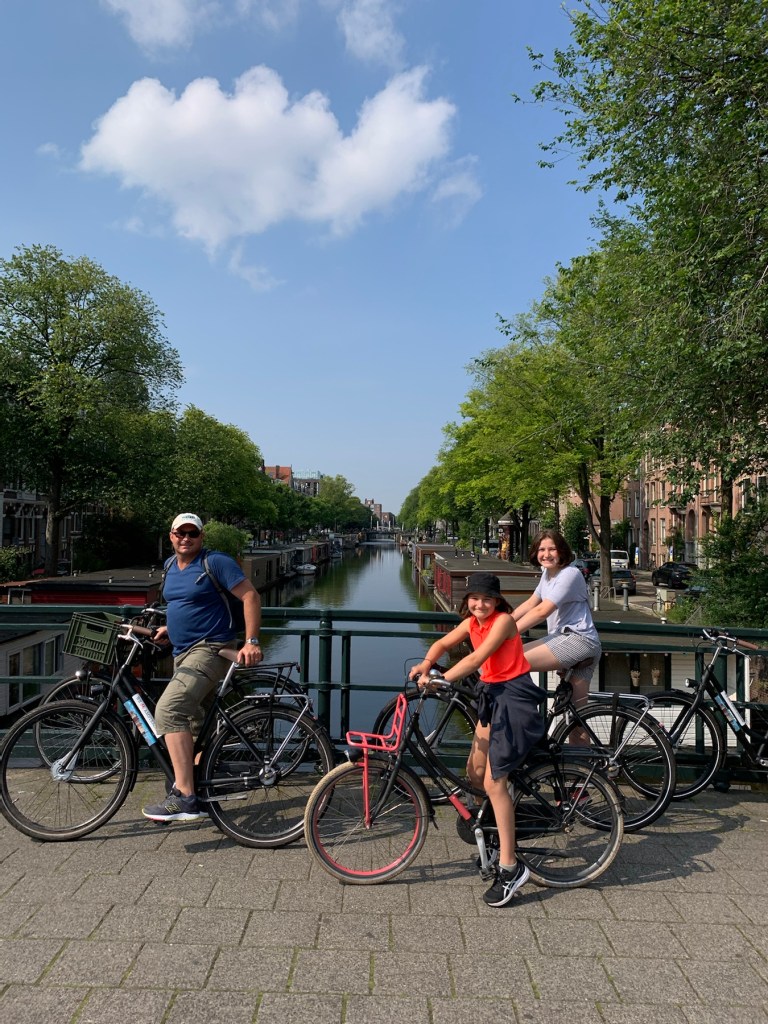
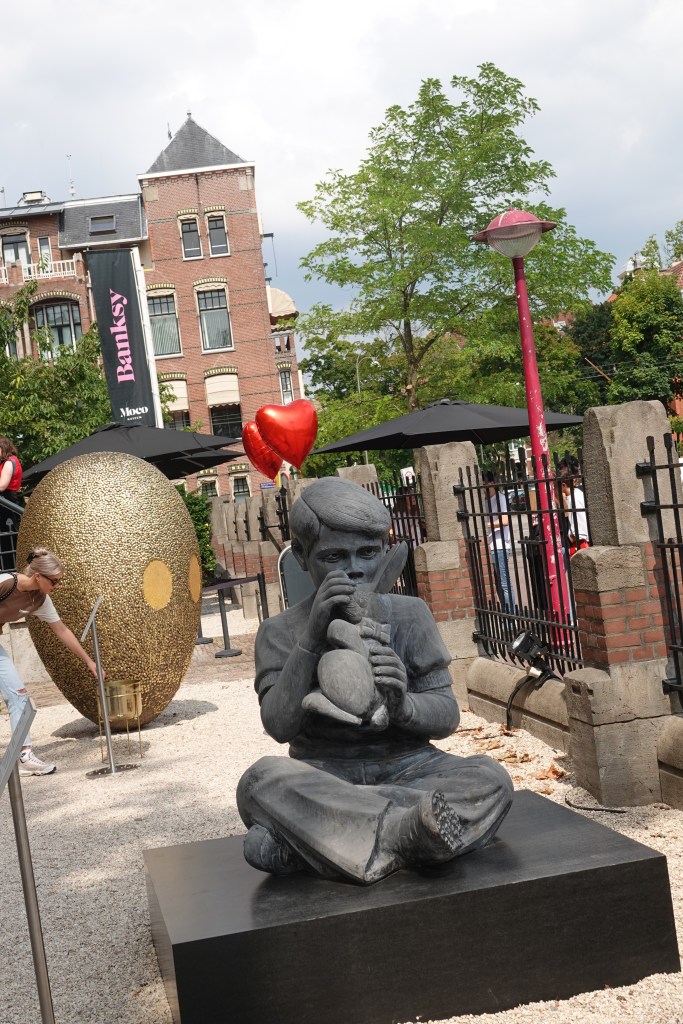
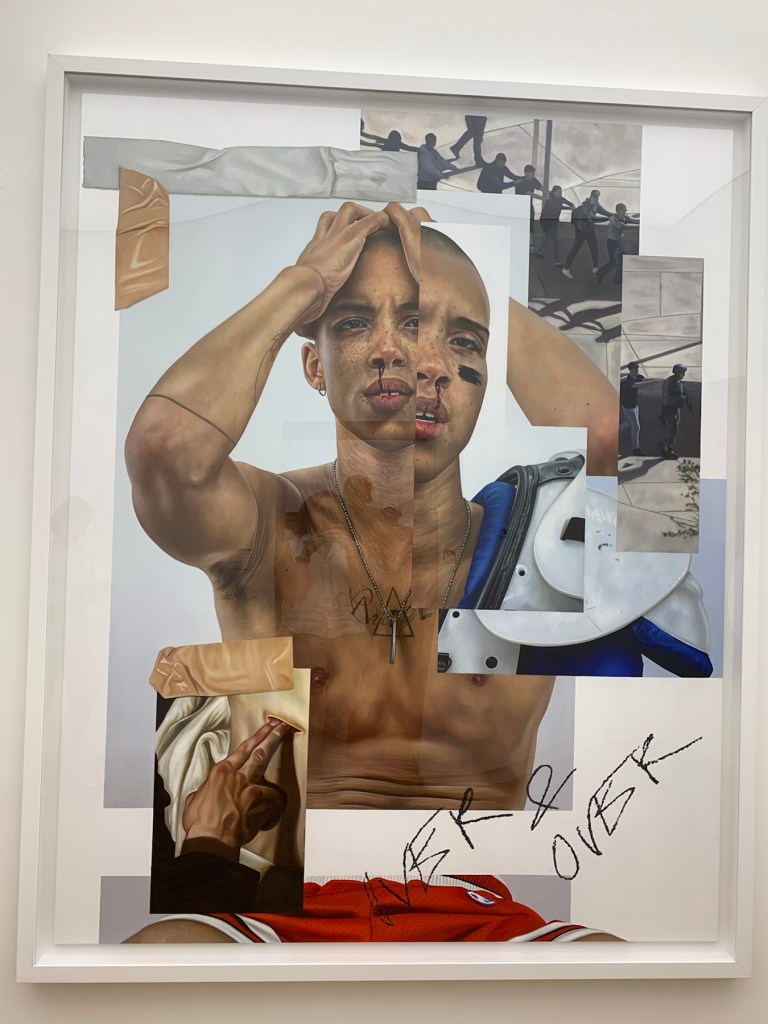
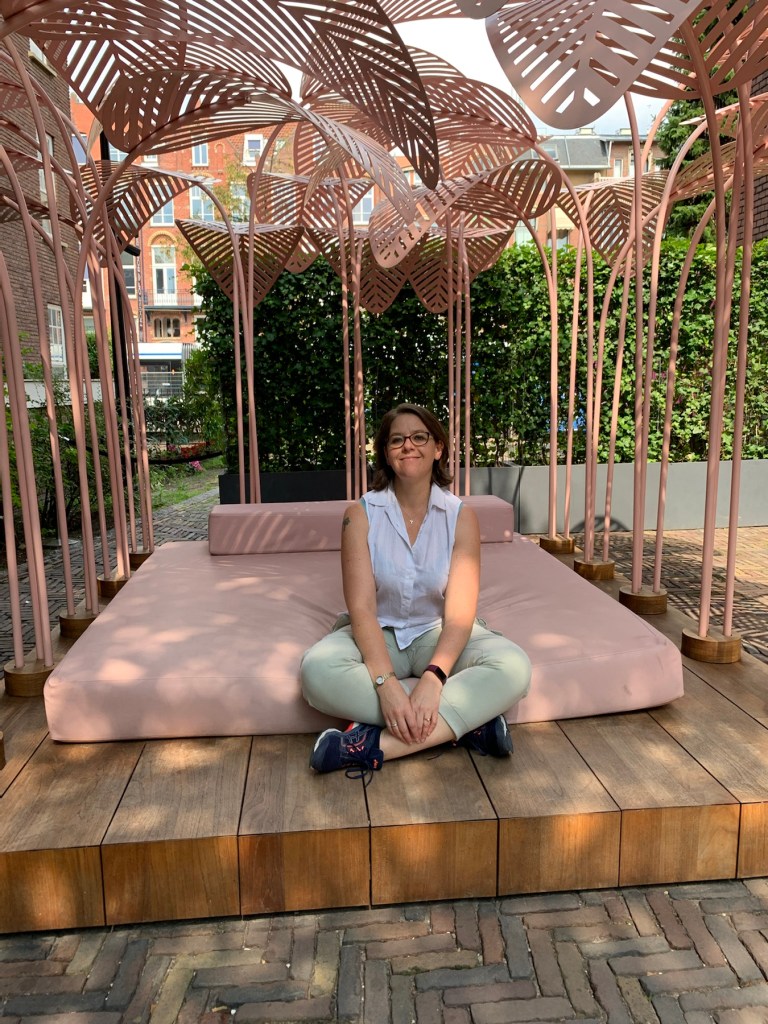
We rented bikes for the day this time, and at the suggestion of dear friends who offered us hotel-style lodgings for a couple of nights (thanks Sal!) , we decided to head to the museum area- the kids are old enough to appreciate art, or the history of it anyway. We decided against Rijks, it might have been a little overwhelming for the 10 year old, and gave the kids the choice between Van Gogh and the MOCO. Van Gogh has featured in their education this year (okay, maybe Doctor Who is not real education), but when we discovered the MOCO Museum exhibited street art, and some Banksy in particular, they jumped at that idea. Again, we almost missed out since we hadn’t booked online advance, but after we asked at the entrance, they were able to fit us in right then. The MOCO (Modern Contemporary Museum, a boutique museum) is great, and has some great information on Banksy, as well as hosting The Kid (with The Future Is Old) and Studio Irma (with an immersive digital exhibit) who I have included in my photo selection here. Outside the building are further pieces by Marc Ange (Le Refuge) and WhIsBe’s Vandal Gummy.
After the museum, we hunted down something to eat at the Albert Cuyp market- the biggest street market in the Netherlands. Too famished for small samples we ended up eating at one of the many restaurants down a side alley. The market wasn’t anything too different to a French market (sorry guys), barre the opportunity to buy vintage furniture for which we had no space in our car, but the homes and shops towering over the street made an interesting backdrop.
And aside from the hundreds of canals and boats and bicycles, it was also a treat to be able to catch up with an old Strasbourg friend while buying tulip bulbs at the Blomenmarkt. Thanks for popping out to see us A ;-).


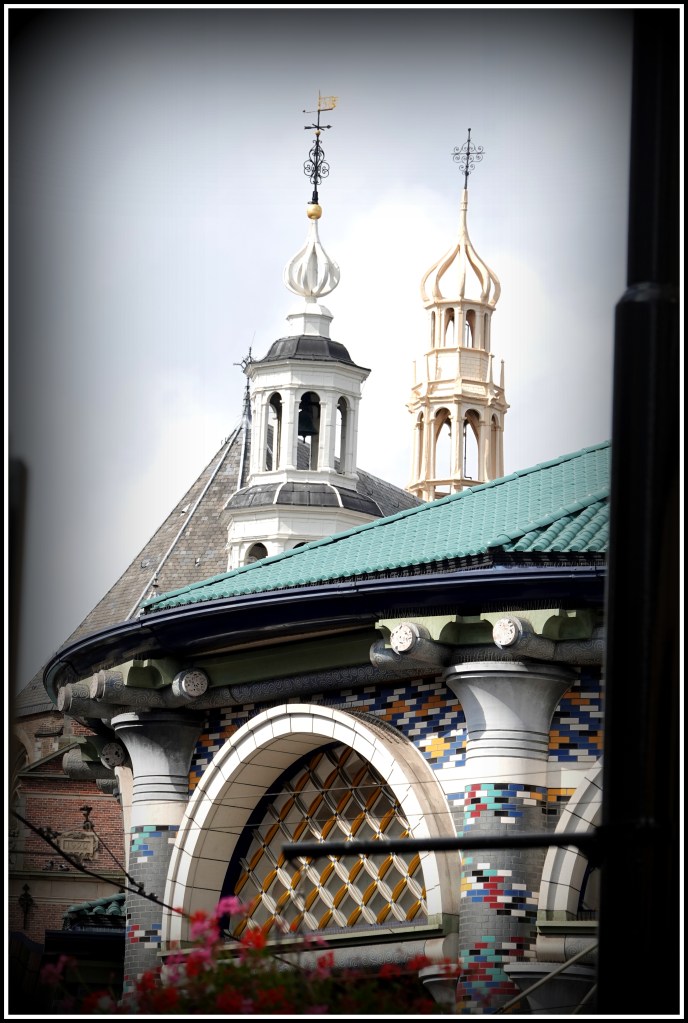

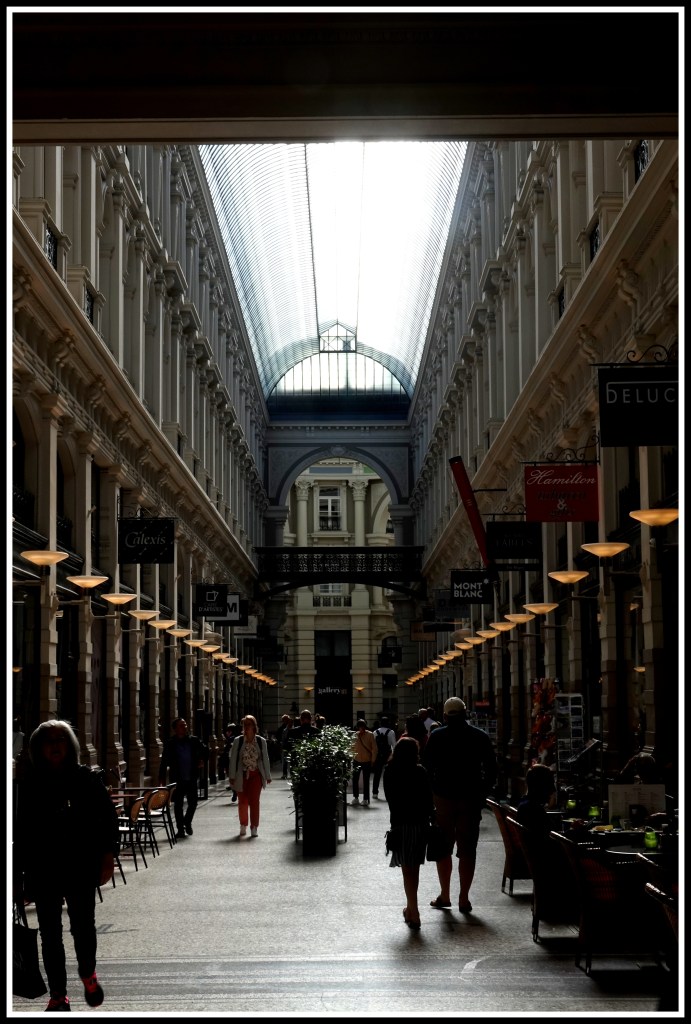


The Hague is where we got to indulge in street food fare, and it’s apparently where you should go to try out a ‘Haring’. Being a farm kid who grew up not eating fish, you would expect that I stay away from anything fishy, but I can no longer admit that “I don’t eat fish”. Scheveningen beach is also home to a fishing harbour, where the fishing boats come in to see their wares. Where else but here is the place to go for a sample of haring. Haring is herring, brined for 5 days, and then served whole and raw, with a small garnish of chopped onion and a pickle. Typically, you should guzzle down your herring like a seagull. With the sea breeze whipping at my hair, and raindrops being kept at bay, I was able to eat my herring in 2 bites. I would suggest you try it yourself, it was not unpleasant!
We had spent 5 days in The Hague last time we did the flatlands tour, so we didn’t hang around much longer this time, but just want to say thank you to Anton’s cousin for putting up with us for a night, and for smoking a rack of short ribs for dinner. It was a great evening to be able to catch up after so long.
As we headed out on our journey towards the next destinations, we popped in to the city center for some Stroopwafels for the kids. Stroopwafels are the Dutch equivalent of a Belgian waffles, but alot sweeter. It’s a waffled biscuit (not crispy, but not cake-like) with a caramel filling. Simply decadent, but just a little too sweet for one person. Definitely try one when in the Netherlands. Van Schaiks Stroopwafels is on Venestraat.


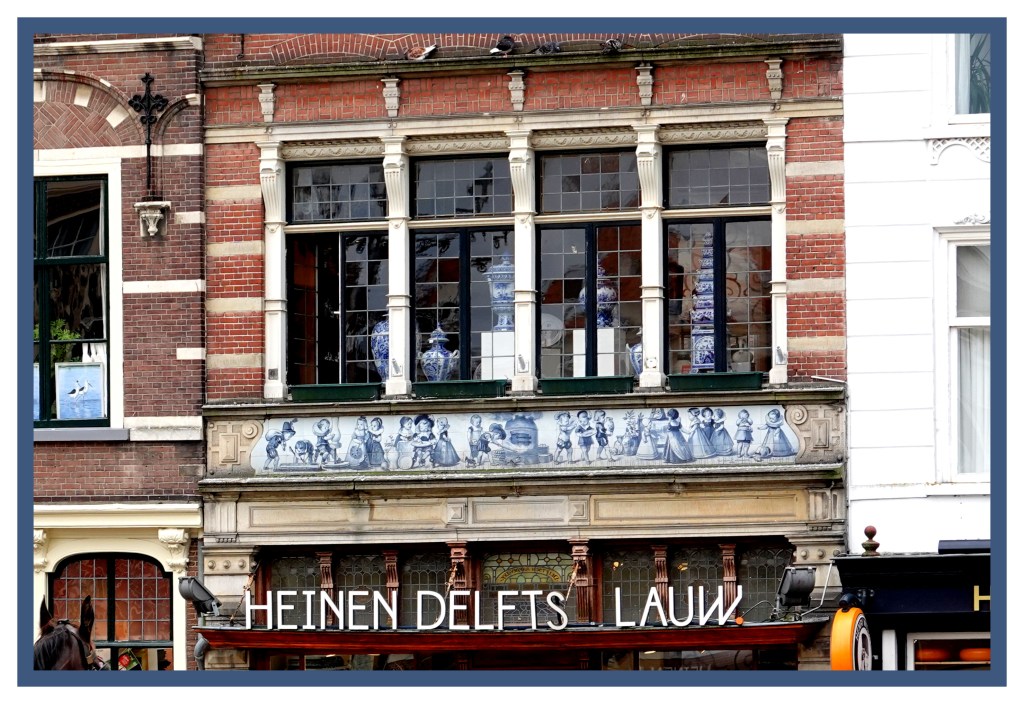

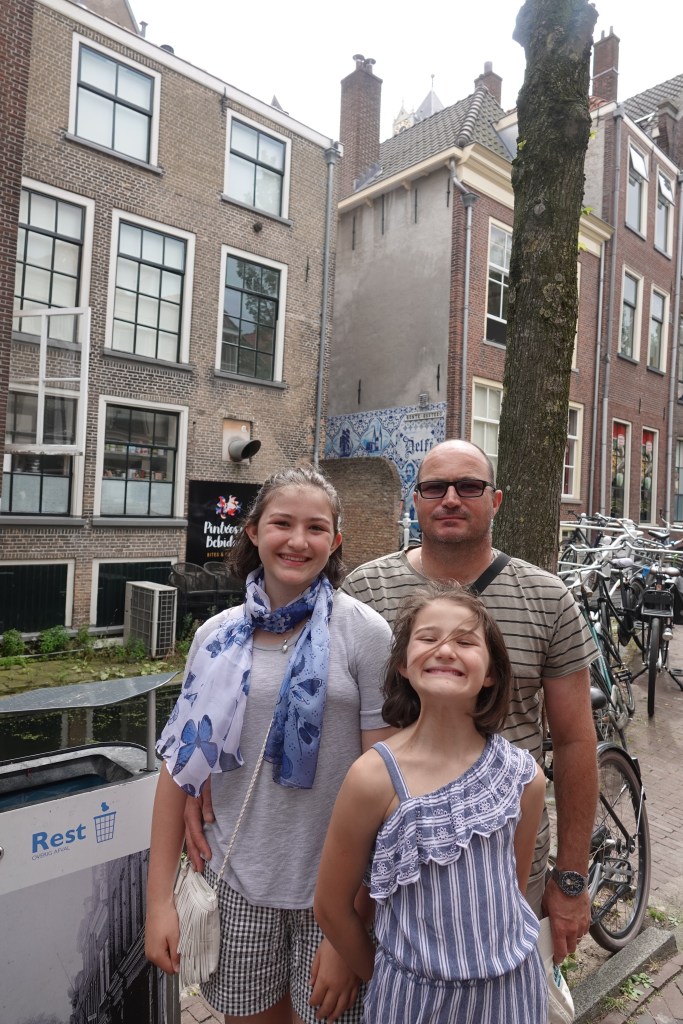

Our weekend accommodation was in a Rotterdam hotel, which was less than an hours drive from The Hague. En route there we stopped in at Delft for it’s iconic blue ceramics and quaint town views. Delft was not far away, a 10 minute detour between The Hague and R’dam, and we had plenty of time to kill before our hotel check in.
Delft goes back to the early days of the Netherlands. Nestled between canals and with historical monuments and medieval architecture, it’s a thriving little town with links to the sea navigation, royalty, the well known painter Johannes Vermeer (The Girl With The Pearl Earring) and blue ceramic pottery. With a huge market square, overlooked by many church spires, we had a bite to eat and indulged in a little shopping.
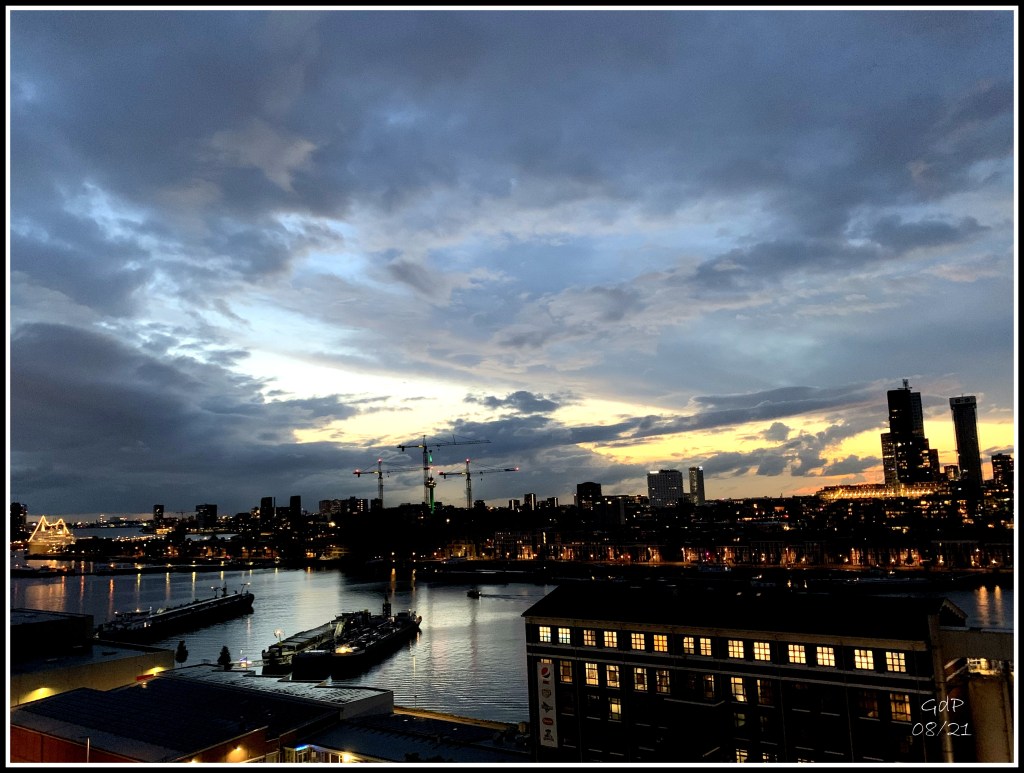

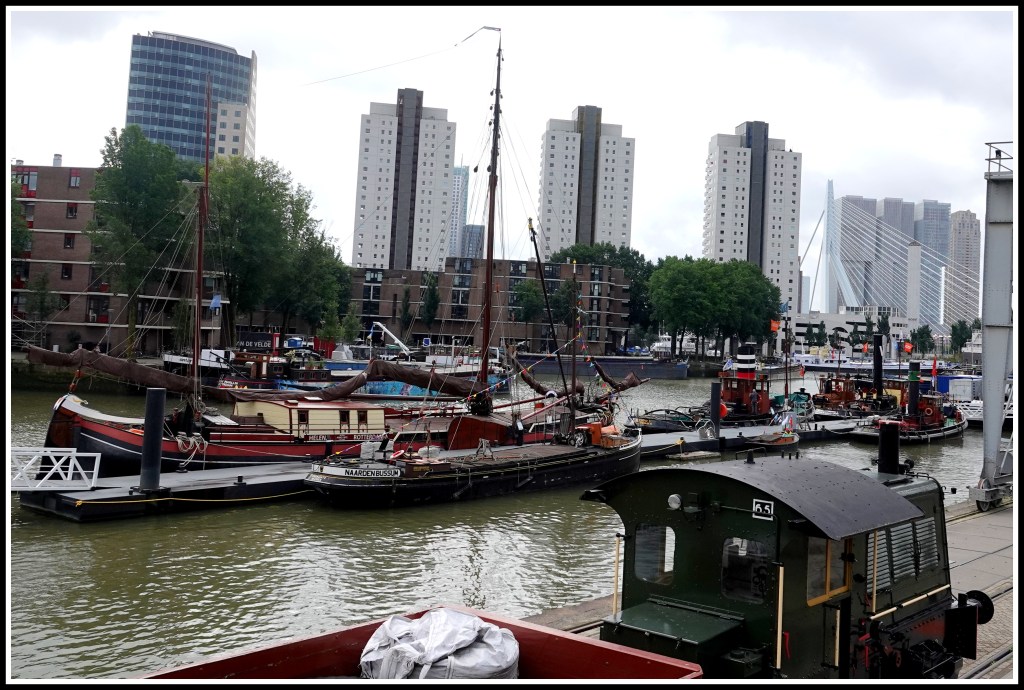

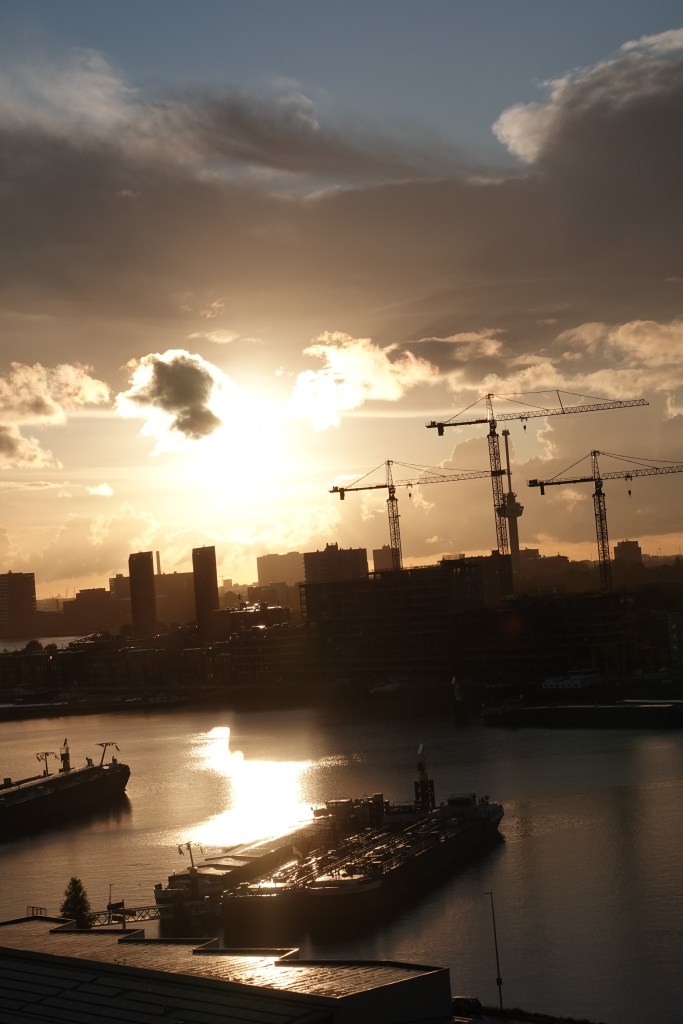


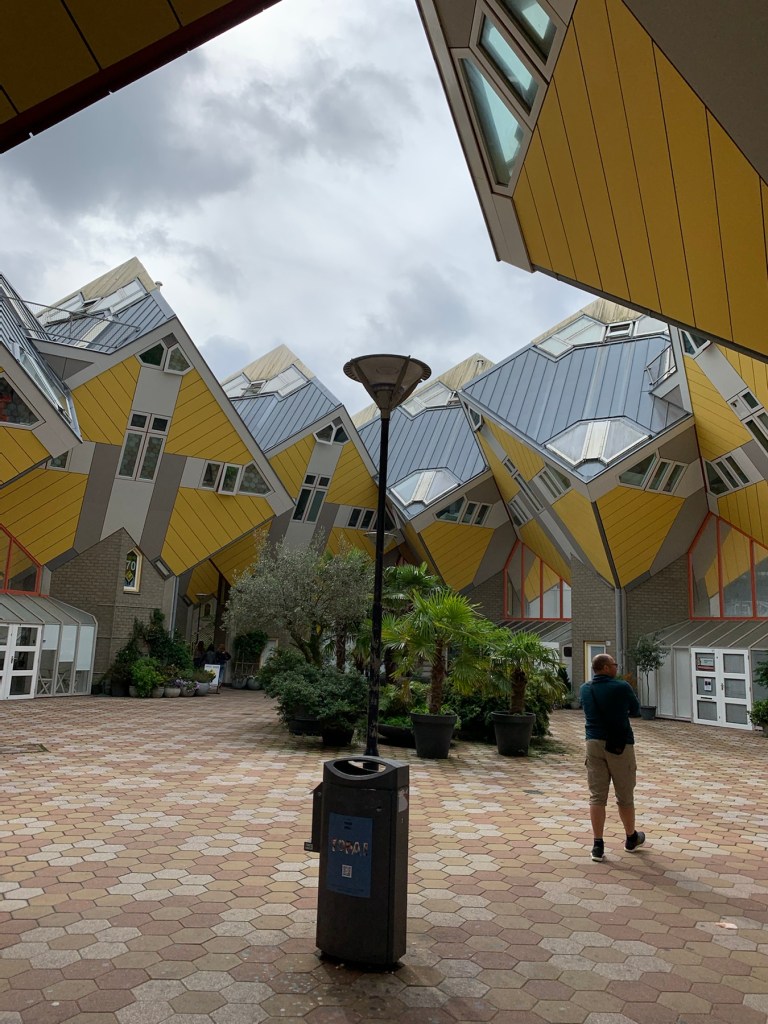


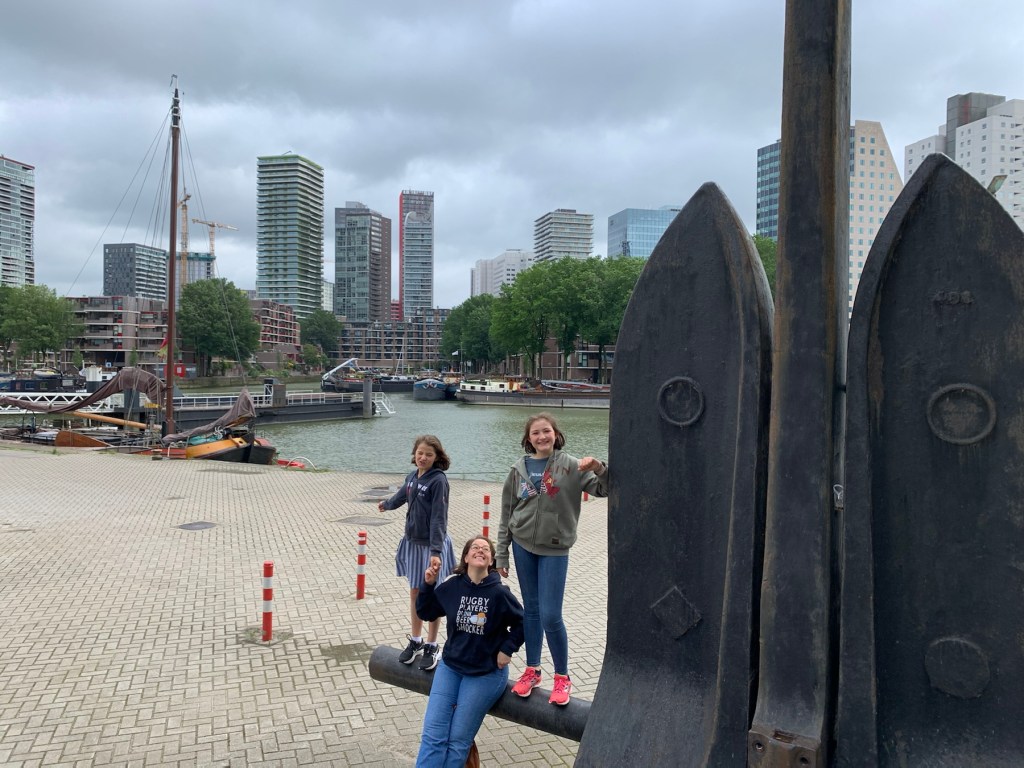

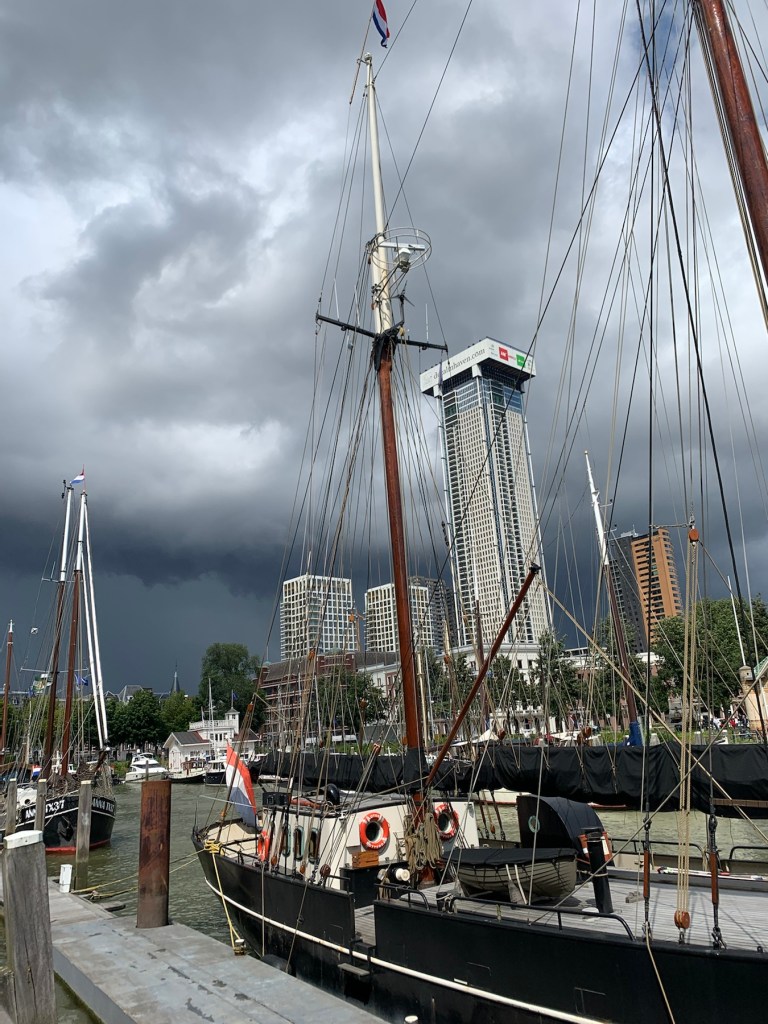

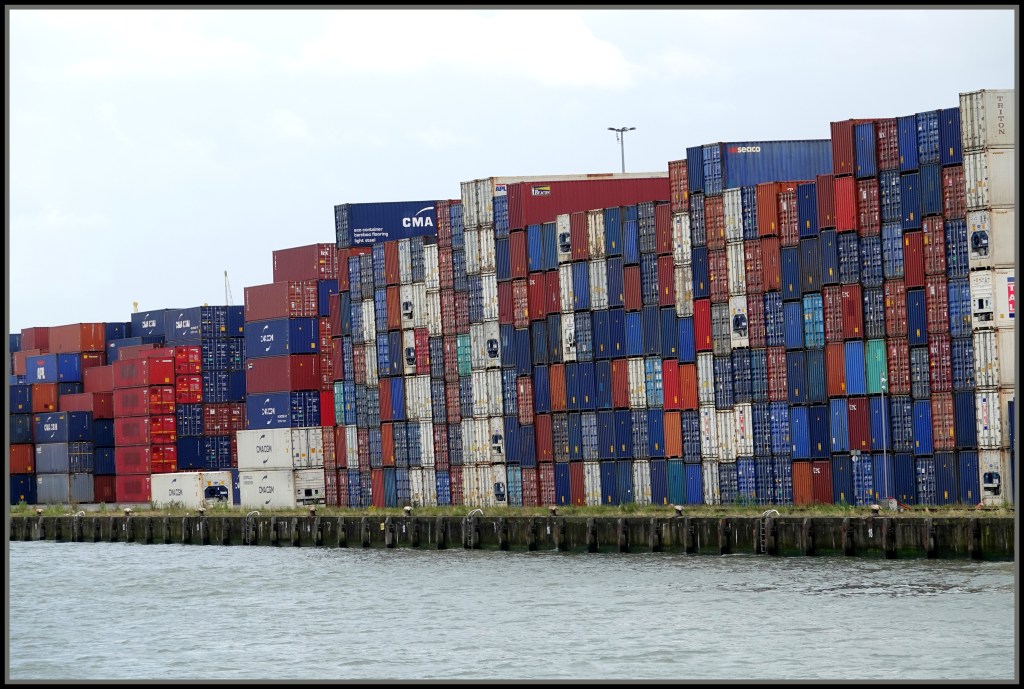
The last time we were in the flatlands, we passed by R’dam en route home. The many, many ship cranes hung listlessly in the distance as we skirted the harbour city, and I have craved a return to this country just to catch a glimpse of the harbour. Let me regale you with my recently discovered knowledge of R’dam.
It is the biggest cargo-harbour in this side of the world, only smaller now than Singapore and Chinese harbours. When our lives were shipped from South Africa to Europe, our possessions passed through this city, a subtle connection for me.
That said, the city was pretty much flattened by the Germans in WWII (as most harbour towns would have been), so for a city that dates back to the 13th century, it is ironically more modern than any other European city. As the city was rebuilt, it appears to have become a skyline of architects trying to out-do one another. Never (yet) have I encountered a city skyline with as much contrast and exhibitionism as the R’dam skyline. Buildings with strange angles, colours I am unaccustomed to, lines and curves, all served around the design of the river that brings ships from all over the world. There is an occasional symbol of old Europe in the boats that dot the canals, perhaps one or 2 old buildings that did survive the bombing, and industry lies directly near to commerce and art. I had managed to secure a hotel room on the 11th floor of a hotel on the ‘other side of the river’. We overlooked the old Quaker Oats factory and we could see the SS Rotterdam ship where it is berthed now as a hotel. (It used to be a passenger ship carrying Europeans over to America for a new life). From there we watched the sun sink down while the clouds and raindrops chased each other.
For our one day in the city, we walked. And walked. And walked. 35 000 steps later, we tumbled into our beds, having experienced howling winds as we walked over the 800metre Erasmus Bridge, criss-crossed the city searching for The Cube Houses (ticked) The Euromast Tower (saw, but never managed to ascend up) Markhal (over-commercial market under a over-designed roof), walked under the Maas River (twice) through the amazing pedestrian tunnel while attempting to head to the SS Rotterdam for lunch, and finished up on a boat trip into the harbour, of which we only really got a third of the way in.
(Bend an ear my EcoWarrior friends. It’s not just beef and dairy industry vying for space that is going to kill earth. It’s you and me and our insatiable need to have stuff. The miles and miles of cargo containers would have been poetic if it didn’t stand for our greed,)

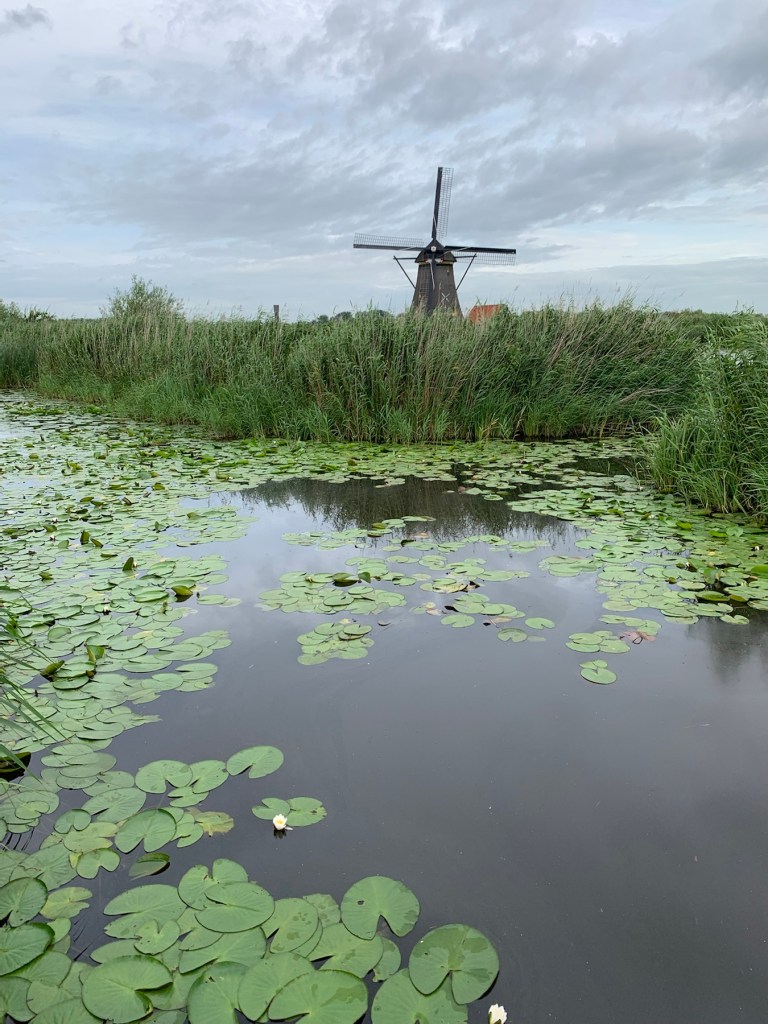
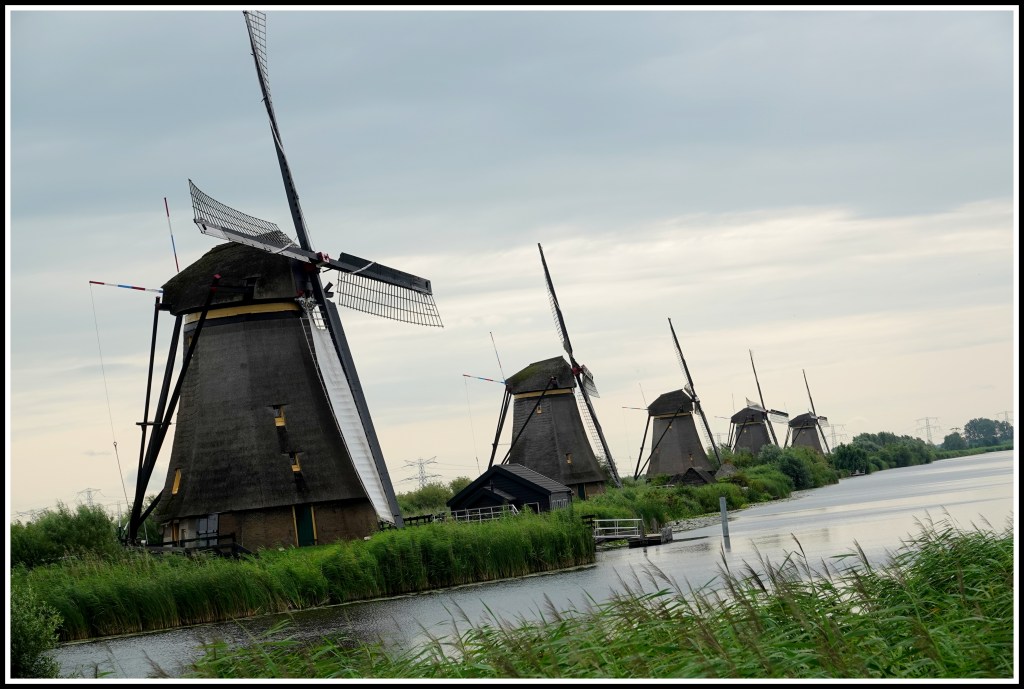

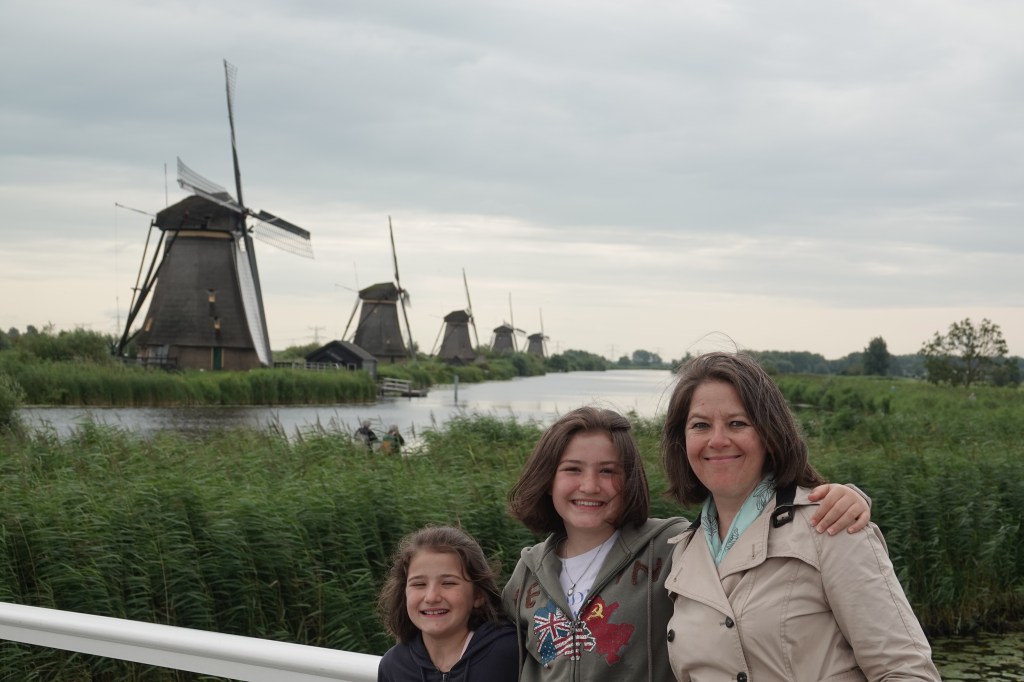

We left R’dam early on our departure day in order to drive through to The Kinderdijks. Here, on the outskirts of R’dam (easy enough to cycle through if you wanted to) is the UNESCO Heritage sight of 19 windmills that date back to the 1750’s. The sole purpose of these windmills was to pump water out of the ‘polder’. A polder is land reclaimed from water, so essentially it is a marshland, or the land created by taking away the ocean in the Netherlands, or at least separating the ocean and the rivers. These windmills were responsible for pumping water away from the low lying areas. I think I have read somewhere that the area of land between river beds and ocean beds are the most fertile for agriculture purposes, but I could be misinformed. It is free to wander around, and again, should you wish to visit the windmill museums, you would have to pay entry.
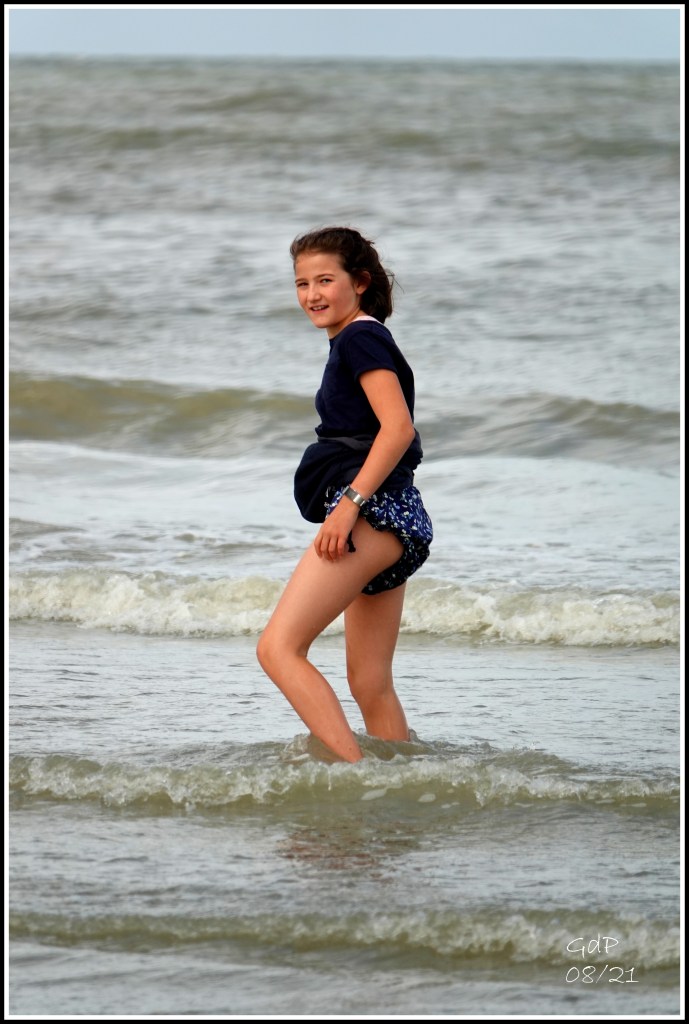




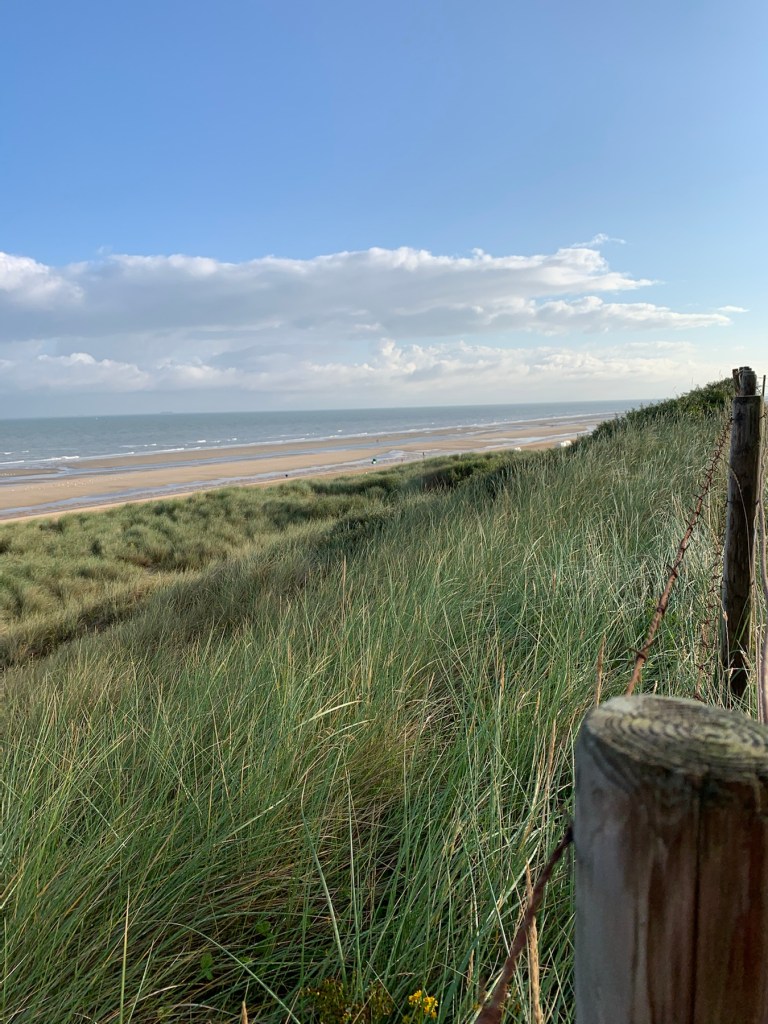

The primary objective of my choice in driving up north for our summer was to be able to spend some time with Belgian friends before they moved to Africa for 4 years. Having told Alex that we would have a beach holiday this year, but had also made the decision to go north, I felt it was a good idea to find accommodation in Flanders, the small part of Belgium that has a coast. As far as seaside towns go, De Haan was a good choice for us. A town small enough to not be overrun, but not too small to not have any supplies, I booked accommodation among the towns holiday cottages.
It’s an oldish town, it’s origins going back to the same era as Biarritz (France) when it became popular for the wealthy English to spend their summers in the fresh sea air. I discovered when we were having lunch with Belgian friends that Albert Einstein had been offered a villa in De Haan in 1933 after returning from the US but unwilling to return to his home town of Berlin as Germany was recently held in the clutches of Hitler, and Einstein was not being welcomed back. The villa he stayed in for a few months is still standing, albeit we never got round to seeing it.
De Haan also has an ecologically protected dune area, so the entire coast line is not populated by apartment blocks and seaside traps. The beach itself is sandy with shells (not easy to find that in Europe) and while it has the lapping waves and tides and currents of the North Sea , it is not Durban. The absence of hot summer heat made the water temperature just a little bit too cool for my comfort, and the rather wishy-washy waves was not what Anton would choose, but it was very much enjoyed by Beth, who would have spent all day there had we given her the chance. She was safe enough on her own, between the life guards and the lack of ocean drag.
It was in De Haan that I got to enjoy the Belgian mussels- a staple menu choice if you’re in the area. (Again, I can no longer profess to not eat seafood.)
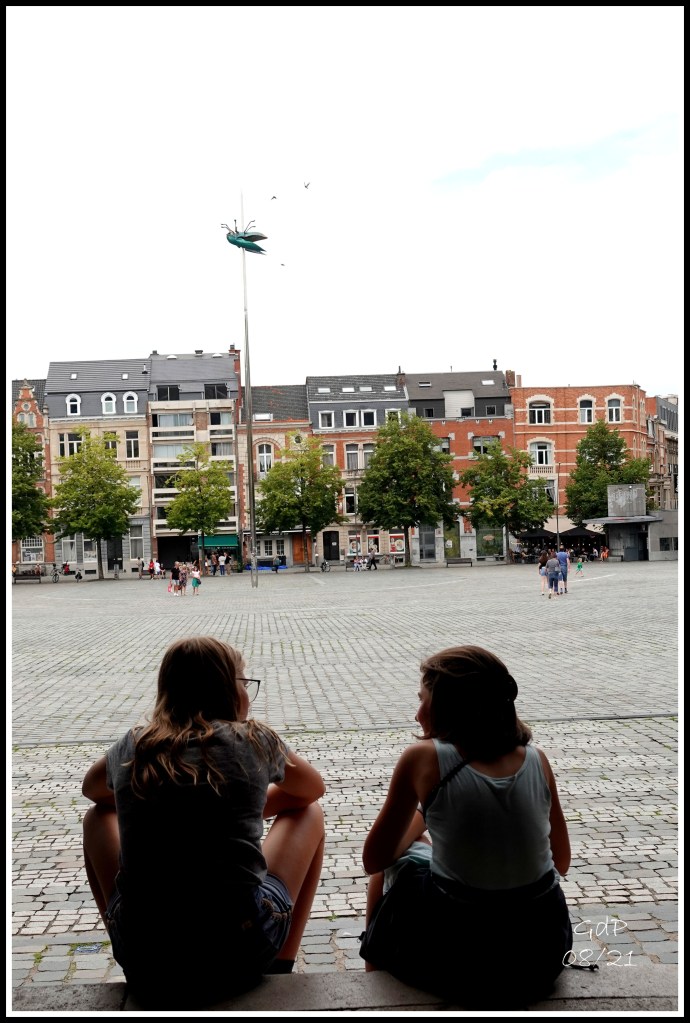
After 3 nights in De Haan we drove to Leuven to meet our friends. Leuven is an old Belgian city, mostly now the perfect place to attend university if you’re in the market for a European education ;-). We had a fabulous tour guide in the few hours we spent in the city (Thanks again N&M). Since uni’s had not yet reopened, we had the run of the city to ourselves, and for me, the highlight was the beguinage area. Dating back to the 1200’s, these are a cloistered series of apartments and alleys set away from the madding crowd. Hosted by the church, but not specifically for the purpose of religion, the beguinages became home to single or widowed women who chose not to (re)marry. Abiding to rules of quiet and chastity, the women were safe in this space, and were also able to earn an income, something virtually unheard of in those times.
And thus ended our travels up north. We’ve had a distinctly cooler summer this year, with more rain than in previous years, which I can assure you, I welcomed.
For most of us, it’s back to work, the kids are heading back to school next week, and by the looks of the city and the tourists, I think the year ahead is going to be relatively c***d-lockdown free. And even if the year has rises in hospitalisations, I can’t see the french government shutting us down again. So there will be an entire new life of normals to become accustomed to.
Let me sign off before this has lost its’ perspective. You’re welcome to reach out if you want to ask me anything else.
Sending love and hugs to all,
Gaenor.
 Pinot, Bretzels, and Cathedrals
What a great holiday adventure you had and pleased that we could be a stop-over for you. Iâve not had a chance to download all the accompanying pics (my laptop does not do it automatically, which is a pain!) but have had a good taste of your lovely photographic skills through your informative Instagram posts.
Great job all round! Enjoy the start of the new school year and the onset of Autumn, which has definitely arrived here in NL, without summer ever having truly made an appearanceâ¦!
Blessings to all of you,
Sal
X