I had lunch with a South African friend last week and we somehow alighted on the topic of the lure of a certain shopping emporium in South Africa- let’s call them ‘W’. There was that social media post that they put out a couple of months back, nudging the expats and immigrants across the world, suggesting they know what us South Africans abroad really miss (and no, it wasn’t the load shedding schedule).
I rolled my eyes (sorry E) because while I appreciate there are many people appreciative of W’s clothing, beauty, household and culinary delights, I always found them overpriced and somewhat niche-marketed (barre their clothes line, naturally…).
I did admit to my friend that I recently saw a shopping basket cost comparison of the handful of the big-name supermarkets in South Africa, and surprisingly W wasn’t that brand that came out as the most expensive… it was ‘P’ that was comparatively more pricy, although I am perhaps not surprised at that information. P was followed by ‘S’, then then ‘C’, and only then W, tailed by the newcomers FLM. Granted, it was a ‘staples’ basket comparison, thus bread, oil, flour, sugar or something along those lines, and the reality is, it serves that W wouldn’t inflate the cost of staples, so like any statistical figures, it’s easy to skew your results to suit your argument.
The reason this particlar social media report was at the forefront of my mind followed another conversation I had had the week before, a lady from Durban questioning the quality of fresh produce from FLM- in comparison to W in particular.
Back at home in South Africa we had the luxury of a FLM on our doorstep, where I would do a lot of my own shopping for fresh produce. What had started out as a market fresh produce outlet had evolved into a niche supermarket of sorts. Certainly, as much as other chain stores differ from suburb to suburb, our local FL’s was flagship quality. It had upgraded and currently encompasses fresh market-style fruit and vegetables, including prepared products (chopped and packaged), a deli/traiteur (what is the English word?) section for meals, sandwiches, salads etc. It has a butchery, fishmonger, a bakery, a cheese counter and a grocery section. However, when we’ve popped in at another FL in another city or smaller suburb, we’ve found the selection wasn’t as good.
But that’s what shopping is across the world, so take it or leave it.
Grocery shopping (or shopping for food) in South Africa is an entirely different experience in comparison to shopping in France. By and large, Europeans shop for a day or 2 at a time, either at their local market or the supermarket in their quartiere if they live in a city.
Some rural dwellers often have to rely on a mobile shop, and the mobile truck is par for the course. We observed this in Italy many years ago, a small array of locally produced cheese, zucchini flowers, cuts of meat- mostly anything found at the bigger city markets.
Also, and this is an enormous difference- Europeans eat seasonally, and regionally for the most part- certainly much more than South Africans do.
We don’t eat seafood often here in Alsace for example, (although it takes centre piece on our Christmas tables). Our meals seem to revolve around bacon and pork, beef, regional cheese (Munster and Emmenthal mostly, but that’s not to say we avoid Brittany cheese, or Auvergne, or Comte, or Savoie, or… you know what I mean), potatoes, choucroute.
However, should you cross into Italy through Switzerland in summer, and you’ll discover the tomatoes to be of the tastiest in the world.
Locals will tell you that the best butter comes from Brittany and Normandy, and naturally, your duck should originate in l’Occitane. Or you could wait until autumn when all the good mushrooms are popping up in the forests if you prefer a mushroom that’s a little wild. Spring in Alsace and Baden Wurtemburg 🇩🇪 is the season for you to discover regional white asparagus, quite different to the green asparagus you’ll find elsewhere, although still very seasonal.
Naturally I have not adapted 100% to this particular way of life, much to my disappointment, because I’m get annoyed at myself when I have to pay 6€/kg for tomatoes in winter when they don’t really taste. But that’s a discussion for another time.
Even now, as aware I am of it, the seasonal changes make a difference to how we eat, and this is a two-fold conversation.
Getting back to that exclusive pricy shop in South Africa, they have based their shopping experience that a shopper can buy literally anything they desire whenever they desire. (I’m pretty sure I paid a stupid amount of money in 2013 when I hosted a March birthday party for Alex that included Jello-Oranges… oranges were not in season, but I could buy them there, at a eye-watering price, imported from Spain no doubt.)
So by and large, South Africans are spoilt when it comes to availability (even though they don’t know it). I will concede that the weather is more conducive to having ripe tomatoes all year round, and while I’m certain there are very good reasons for needing limes in summer, I feel that a more reflective approach to our nourishing in general is the way forward.
These views have arisen over time as we continue on our journey here in Strasbourg, discovering people and their different cultural approach to life.
Sadly, the collective new migrants of Sud Af’s arriving in France find their shopping experiences to be very different. It doesn’t help that they can’t find familiar items like chutney and rusks, and I’ve uncovered an element of young rugby-playing boys bemoaning the absence of a.) affordable and tasty meat and b.) the range of ready-made meals at W.
I empathise for a moment, because we’ve all been there, but in the end my annoyance at how spoilt we are rises to the forefront, and diatribes such as this end up spilling from my fingertips.
Respectfully though, we learn as we go on.
Yesterday I was a SAHM, and could focus on feeding my family healthy choices.
Today I’m working what feels like a 45 -hour week and I spend my days stressing about how to successfully balance a plateful of 5 food groups, a chewey joint of meat, a fussy 12 year old, a hubby trying to manage his weight, our carbon footprint and our budget.
Oh, and having to worry about ‘ready-to-eat’ shortcuts such as IKEA meatballs and fish-fingers (which I admit feature in my freezer for those days I cannot get round to cooking for my kids) because I believe it is here that lies a portion of blame for ill-health, allergies and such.
Naturally I have zero expert foundation for saying this, but surely the plethora of additives to manipulate the shelf-life of these items- frozen or not, not to mention the vast scale at which it’s produced means that the health benefits are somewhat diminished? Or at minimal- the overdose of sugar, salt etc become excessive and unhealthy? As a chef with 25 years of experience, I am a firm believer in ‘back to basics’ in our meals, but I have an advantage over many other families which I do respect.
Over my years here in France I’ve wisened to certain cultural and culinary nuances- for serving white asparagus (spargele is the German name) and ham in April and May, and enjoying a Raclette evening with friends in the dark cold winter months. I’ve gradually reduced our meat consumption, and my girls have realised that there is a season to serve a real beignet- just after Mardi Gras as we anticipate the upcoming Easter period. I now wait in anticipation of cherry season, capitalise the late spring days with the rush of strawberries at the markets, I avoid buying mangos if I can, and expensive tasteless imported avocados remain on my ‘naughty list’.
And then over the Covid days, while on a break from work, I discovered the idea of foraging. Yeah- foraging…you know- like a good country dweller, out rambling and alighting on something edible! Or simply a South African bokkie [sic] nibbling on new tender grass shoots after winter 😋- even if the latter description is the exact truth!
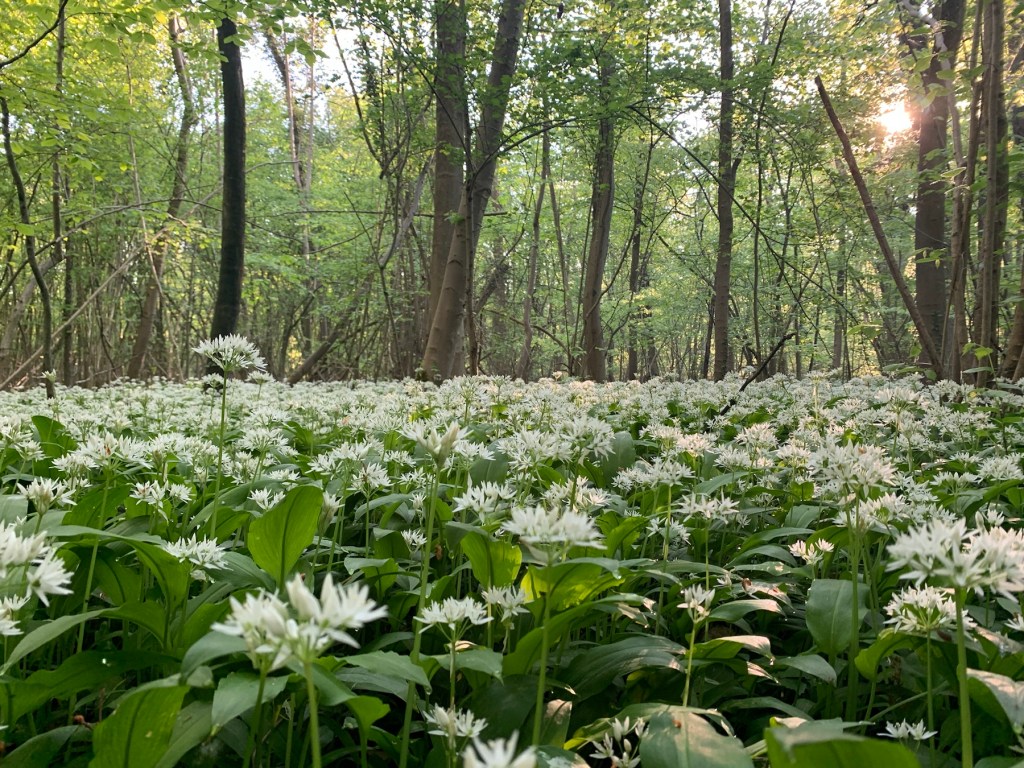
Our home is in the outer ‘burbs – we’re surrounded by farmlands, open fields and a forest. And the ability to roam freely over all of it. However, before Covid, we just didn’t roam. We might have ventured into the forest occasionally but certainly not with the same frequency as we did when I wasn’t working full time. And it was in those days that I really noticed the cycle of naturally occurring and wild flora and fauna in the wild spaces. Wild garlic pops up on the forest floor like a newly sprung carpet in April. At the same time, in the open spaces of the farmlands, stinging nettles flourish in happy abandonment. Alongside the roads I noticed trees with a certain white flower popping open, and then a nearby restaurants instagram page features these same wild items in their kitchens, being boiled or blitzed or brined… what was I missing out on?
And so began my forays into Mother Nature’s bounty.
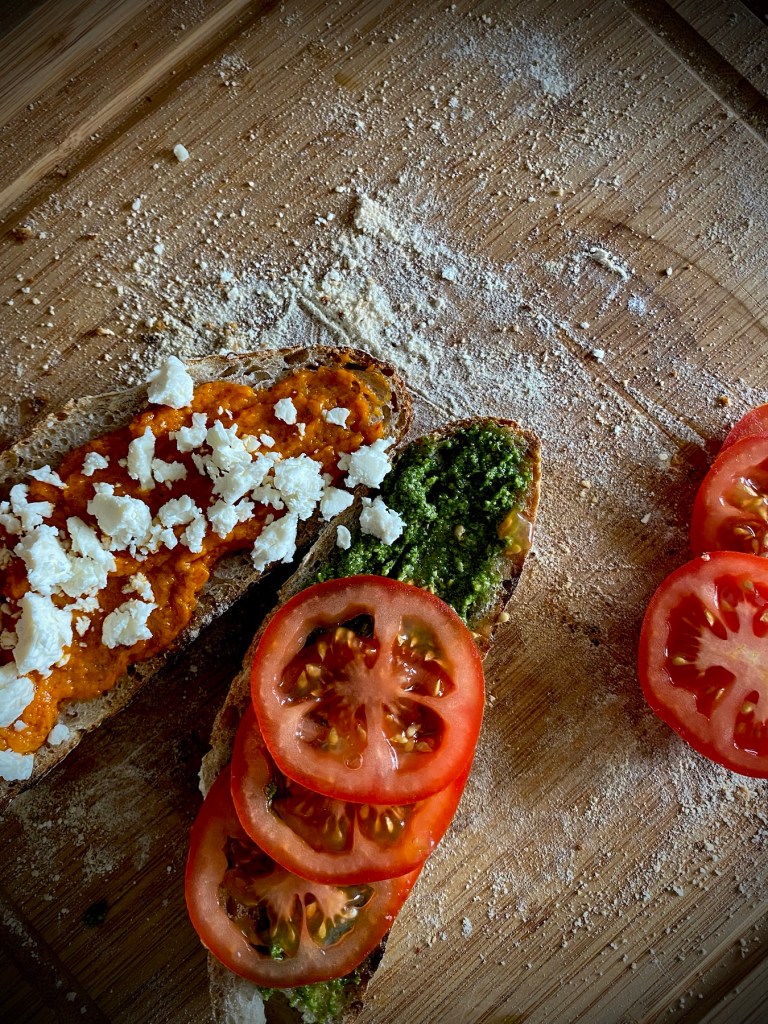
Their season is short- every week I head to the forest for a run as spring approaches, I look for the telltale green plants, and then wait a week longer for when their leaves are wide and the little flower buds of the wild garlic begin. It’s then that they’re at their best, and all you need is a basket of leaves and the little buds, and you can make yourself a wild garlic pesto. Leave it too late, and the flavour of the garlic is just too strong; the flowers opened make for a beautiful photo, but they’re less edible- or so I’ve read.
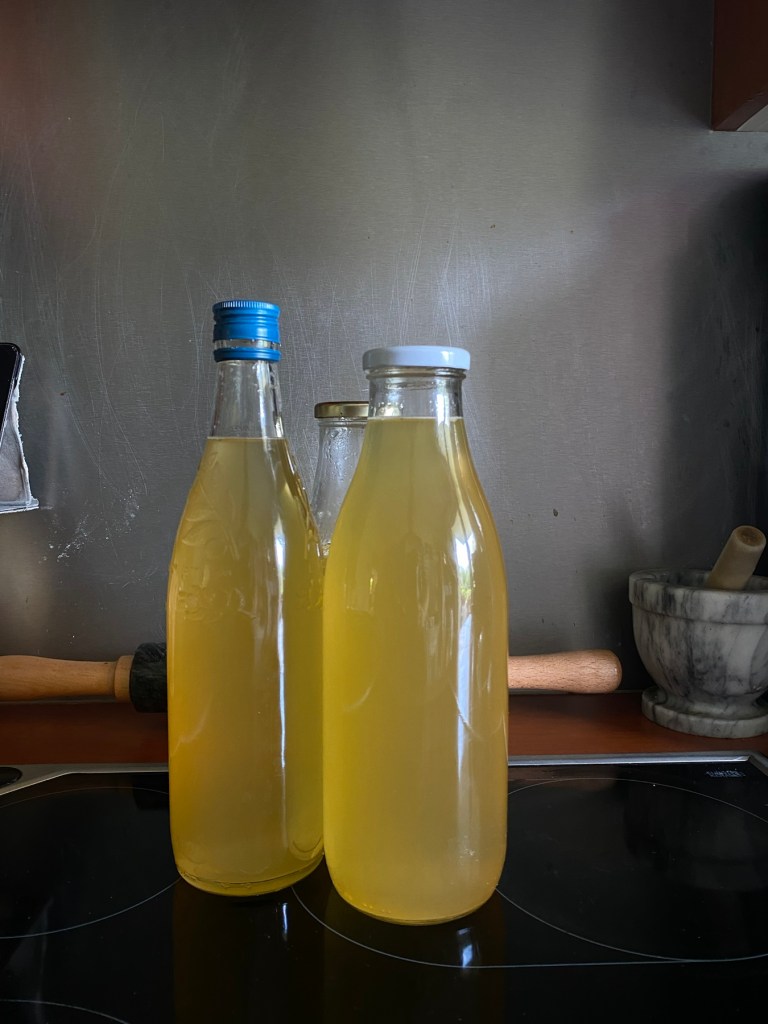
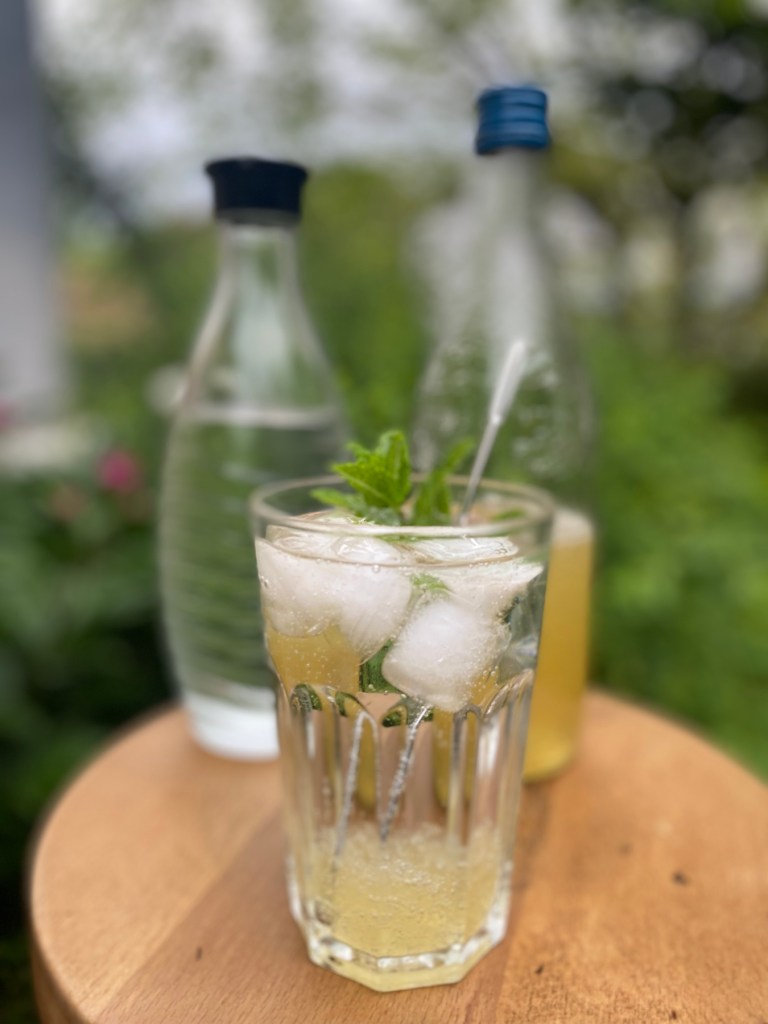
Or it’s a month later and the elderflowers bloom. The rush of their heady pollen-filled scent fills the night time air on my travels home on my bike after work, heavy and thick with nostalgia already. Early in the morning, while out walking and nighttime dew still clings to the flowers, I collect a basket filled with floral heads, rinse them to rid them of insects and roadside pollution, and then infuse them in boiling water for 24 hours. This is followed by making a syrup with that infusion, and voila- you have you own cordial for the sultry summer days.
There is a cherry tree outside our kitchen as well as some others across the field, which I plan to raid for cherry rum this year, and there’s walnut trees across the fields too, as well mirabels and plums down by the river. The land appears to belong to the city- no angry farmer seems to rally us if we pick a small bowl for our kitchen table. And the value of this foraging process? We take only what we need for ourselves for a few meals.
As I wrote a few paragraphs ago, I discovered these spoils of Mother Nature at a time where I was free of work obligations. It’s truly incredible how a 2 year flow of seasons makes a difference if you stop to observe it, and I remain truly grateful for those downtimes. It’s more difficult to take the time now to be conscious of where we are in the solar cycles but I try, and it is these little moments of time that become unique. It’s as if I’m wrapping a ribbon around the gift of nourishing my soul- also, something to be grateful for.
In Conclusion
I’m not my intention to be dismissive of your shopping choices- please let it not come across that way. Honestly- we do what we have to with the limitations of time and money on hand.
In an ideal world I would dedicate my culinary profession to creating recipes for you that are everything that I’ve professed to enjoy, but with the pleasure of not spending 2 hours in the kitchen.
Truthfully though, how I spend my soul-filling happy times are exactly there: in my little kingdom, a place that others perhaps don’t see the same way I do.
And in the way that we remind ourselves to be kind – to ourselves and others, just do you.
Right?
Love and wishes, from my workplace to your desk,
G
Xx




 Pinot, Bretzels, and Cathedrals
I love the freely available wild food I’ve found while walking here in Brecon, Wales! Your blog resonates, and yes, I try to eat seasonal produce as we did in SA. 🙂 xxx