I’ve spent the last few days reflecting on whether or not to tell you every noticeable detail of our holiday, or simply write up a natty piece of observations from the perspective of a family of 4, visiting Tuscany for the first time.
However, how to be natty while trying to describe the sun-baked woman fisherman, standing on the banks of the River Arno outside Pisa wearing a G-string bikini and nothing else-is quite pointless. Also, if I think about another leathered (but not old) man who was walking his dog, and he was wearing a speedo, I realise that a simple point form letter to you just won’t suffice. I have so many images and thoughts on our trip, I may just have to bore you to tears.
Being in the Euro-zone makes you think that all European countries have the same neatness to them as France, Germany and Switzerland, but I realised that there really are two sides to this, because Italy was never a formidable economic force, and there are vast sections of the country that look as derelict as parts of South Africa. The veld is patchy, with weeds sticking up everywhere. Outdoor (non tourist) public areas appear to be tatty and dirty. There are empty, boarded up buildings which appear to have been forgotten about because of the vines growing all around them, and grass encroaching on their foundations. Other houses that are lived in have paint peeling off the walls, with broken areas roughly patched up.
However in stark contrast to that was the really amazing network of roads that took us into Tuscany- in the week of driving between Compito, Pisa and Lucca, our Garmin took us several different roads to get us back to the same destinations. And of course, I was blown away by the highway from Parma down to La Spezia, through the Appennino mountain range. A relentless route through steep mountains, the Italians have carved out a smooth tar road through tunnels carved into the mountainside, high above the rivers and tiny villages down below. Bridge after bridge spanned crevices that are 200meters long, it felt as if the earth was falling away below us. Those roads really did make me think of the phrase “All roads lead to Rome”, although for more literal reasons than figurative.
Aside from the road network, the transport of water is also indicative of a successful government (so despite the appearance of poverty in abundance, perhaps the Euro-zone is propping Italy up?). The lady (S) we were renting a house from told us that in the hills about the cottage was a natural steam of water that we could take our water bottles to and fill them up- for free- with fresh mountain stream water. I figured she was being a show-off, but I stored the info at the back of my mind. The next evening we took the girls walking into the village up the hill, and to see how further out we could have driven. It turned out to not be very far- the entire length of the main village was around 700meters, and there is nowhere to drive. The forest is all that there is, but as we headed into it, we found the stream that S had mentioned- set into the rocks was a sculpture of an Egyptian pharaoh with water streaming out of a pipe, into a ceramic basin below.
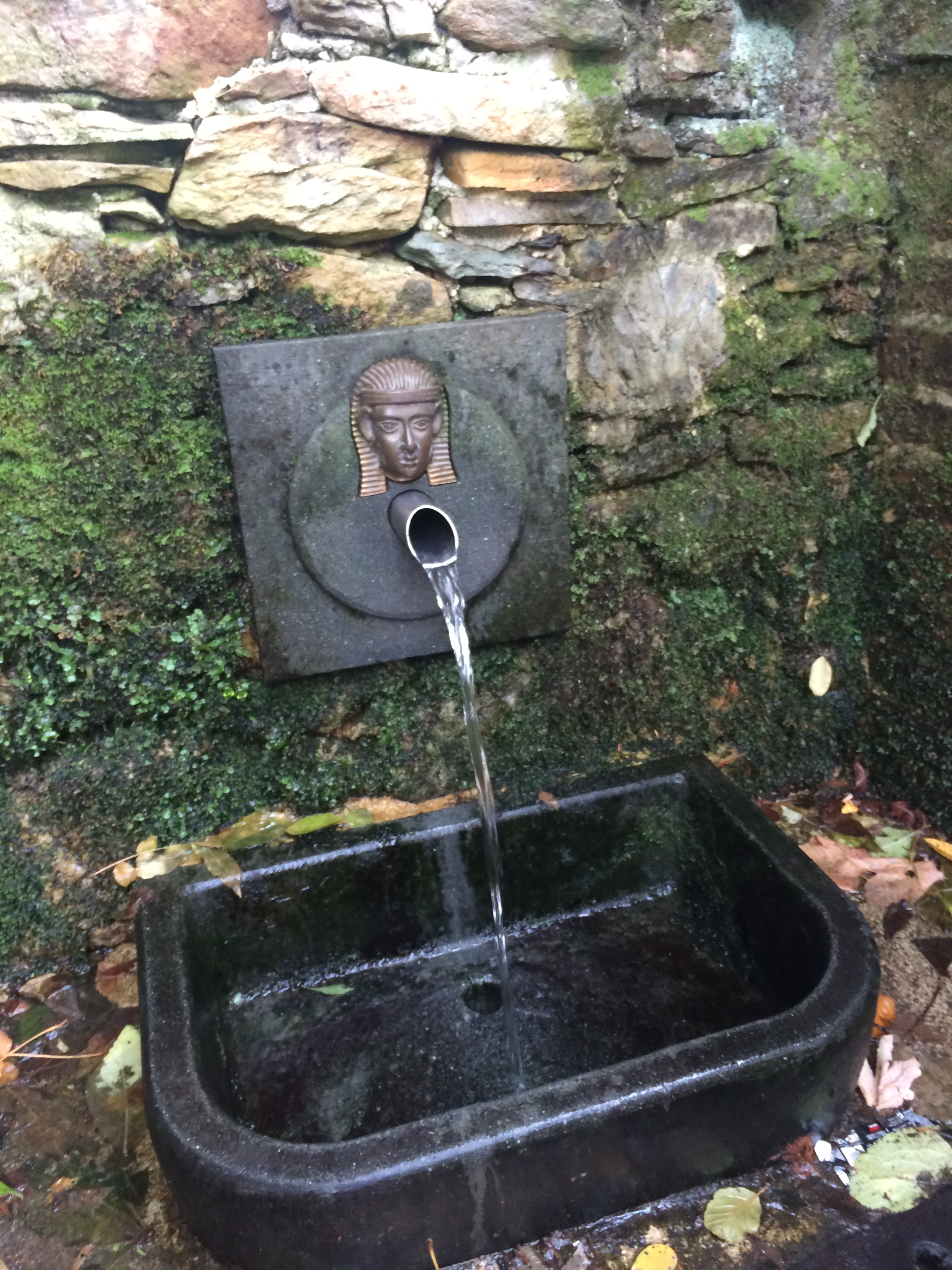
While we were taking a drink- through our bare hands- a local villager drove up, off-loaded a case of empty water bottles from his 3-wheeler truck and queued up behind us. In the ensuing 5 days we would see this happen again and again and again in various parts of the province- as long as you’re happy to carry it yourself, genuine spring water is available for FREE!!! Granted, in the next few days we took our own water bottles up every evening and stocked up on ‘magic water’. Alex and Beth loved the concept.
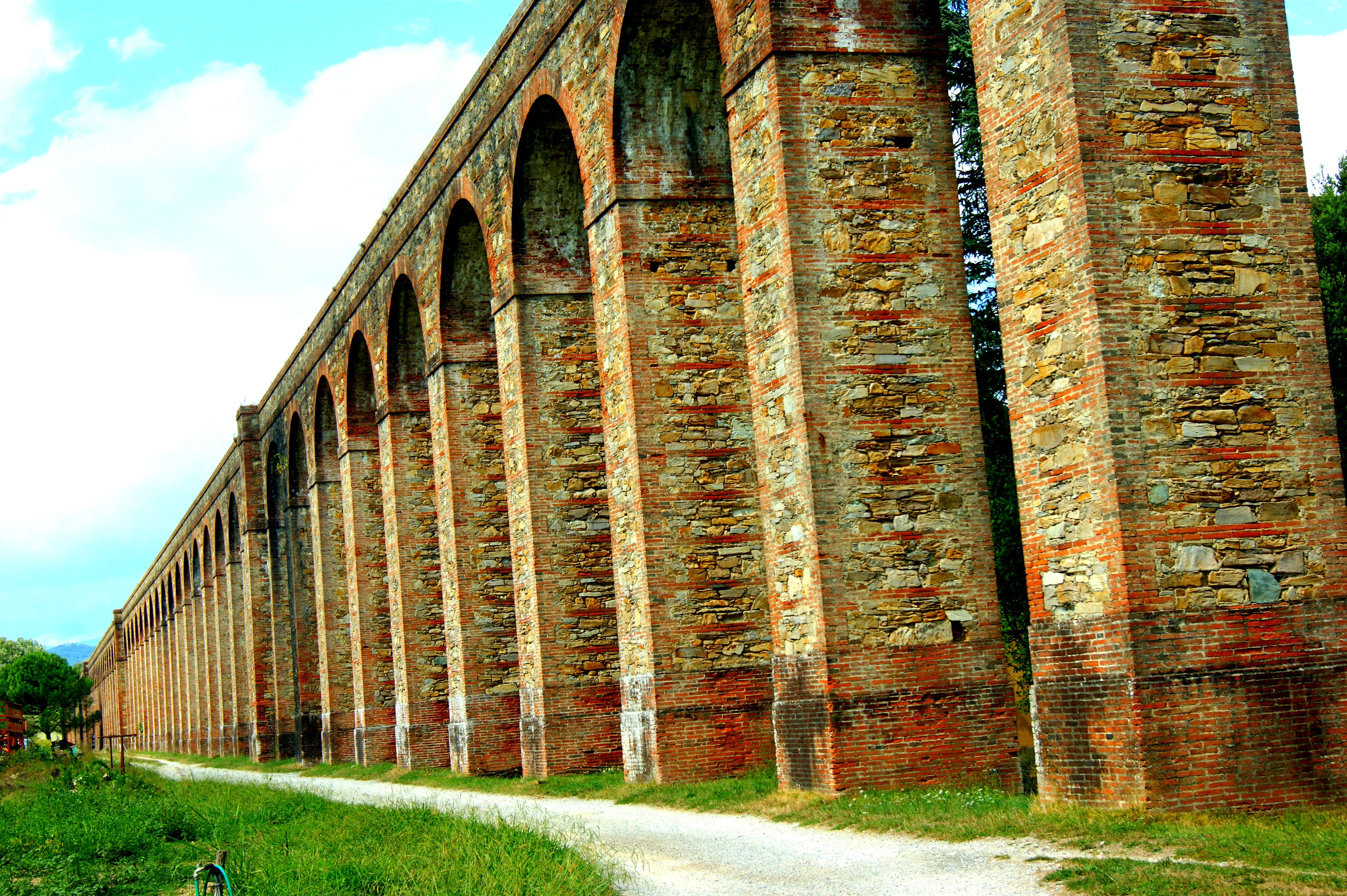
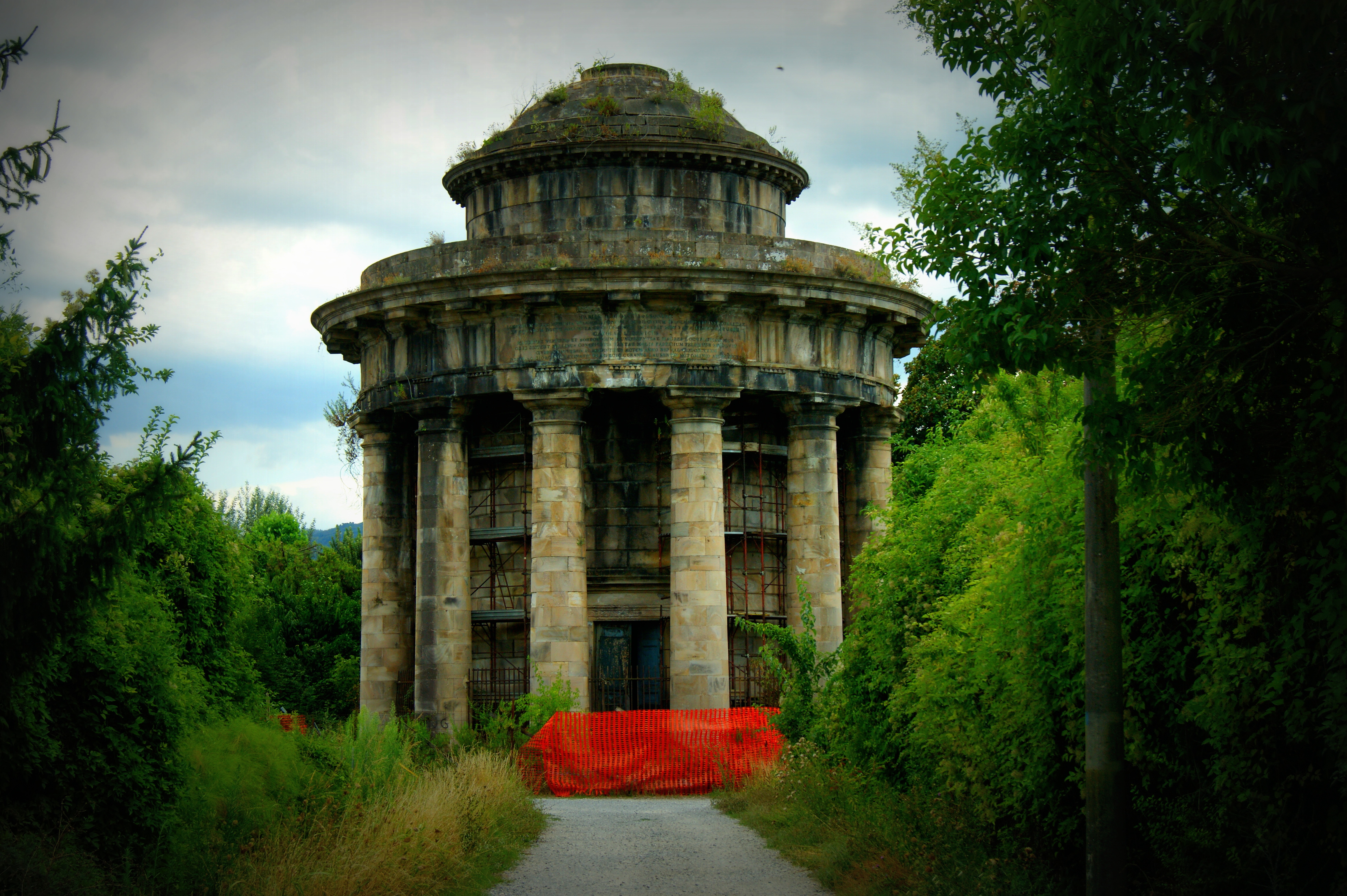
Talking about mountain water, the other sight that I just loved was the long aqueduct that we came across. Having done some quick research, the one we saw has been documented online (just not on TripAdvisor…), and it was designed in 1823. I was captivated, and made Anton take time out to drive us to a point where we could photograph it.
Oh dear- I can’t make this a 3-part-er piece, so put this down for the moment, go and grab yourself a cuppa coffee, and then come back.
Where was I? Back to the beginning maybe? After the disaster of Milan, we decided that we should avoid going in to Florence, but we lined up Pisa, Lucca, some wine tasting and a visit to the beach instead.
Seeing Pisa as we headed from the hills down to the low-lying city was quite cool. The city is relatively flat, and the tallest object that we could see was in fact the Leaning Tower. We navigated the city and found a parking outside of the city’s high walls. On foot we walked into the town, and the very first thing we can across was the Piazza dei Miracoli. This is a large square (ish) grassy area, on which you can see The Leaning Tower of Pisa; the Pisa Cathedral; the Pisa Baptistry and a Cemetery.

Oh, and HOARDS of idiots tourists all trying to take photos while pretending to push the leaning tower back. (forgive me my love- I know you suggested it to us, but after seeing everyone around me trying to capture that moment, I just couldn’t bear the thought of being one of those…). Anyway, we wandered around taking in the brilliant white buildings, as much as the Beth-meister would allow, and decided against paying an entry fee to go through the Cathedral and Baptistry. Pity, because the detail that went into the building of the structures surpasses the detail that I have seen here in France.
After a walk in town tasting some local ice-cream, we went in search of the beach, which we found just outside Pisa town. I still cannot get over how tanned the Italians are- while it may be quite natural for them to be more tanned than me, the level of tan was incredible. One lady (who perhaps could have afforded to cover up more) had quite noticeable white lines below her buttocks and in her leg creases ;-).
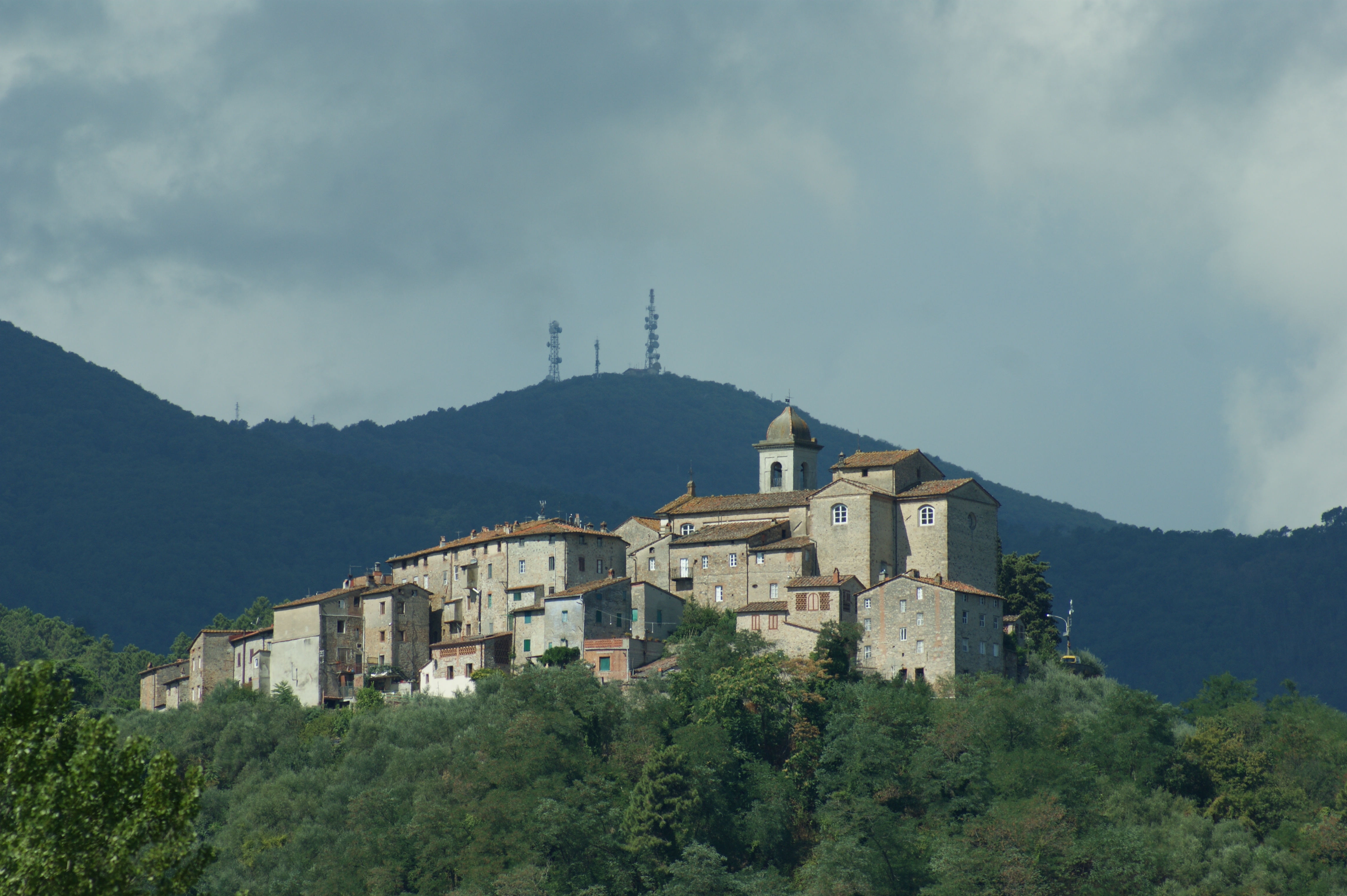
The next day we set aside for a quick trip into Lucca, walking around the villages in our area and we hoped to be able to locate somewhere to taste wine. Italian countryside lifestyle is incredibly unique. Little hamlets seem to perch on the top of a hill, and from afar, they resemble ancient derelict castles. The wine-lands are a serene view of grey, green and bleached images. And Lucca is a quaint town filled with inspiring arches and narrow roads:

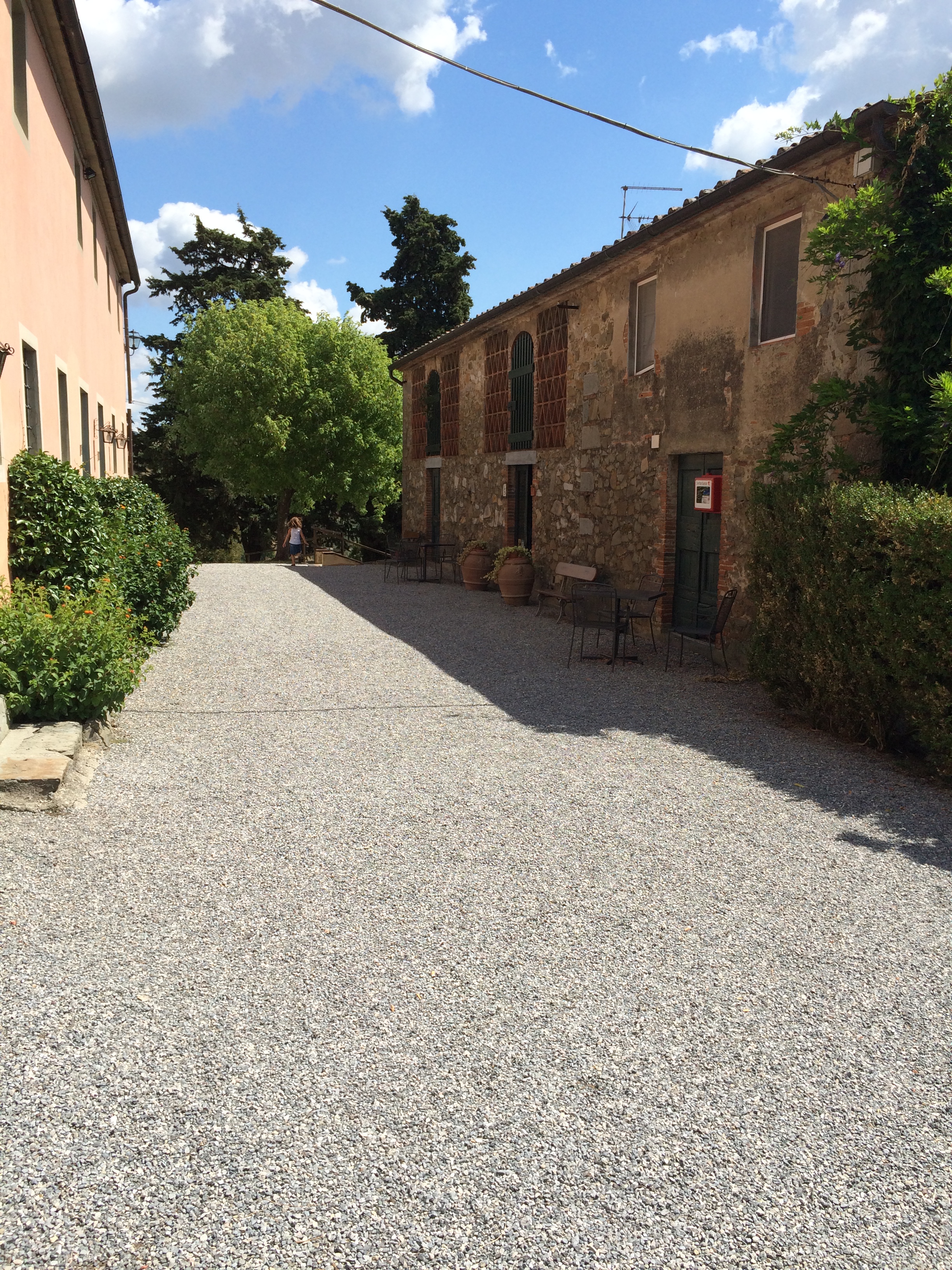


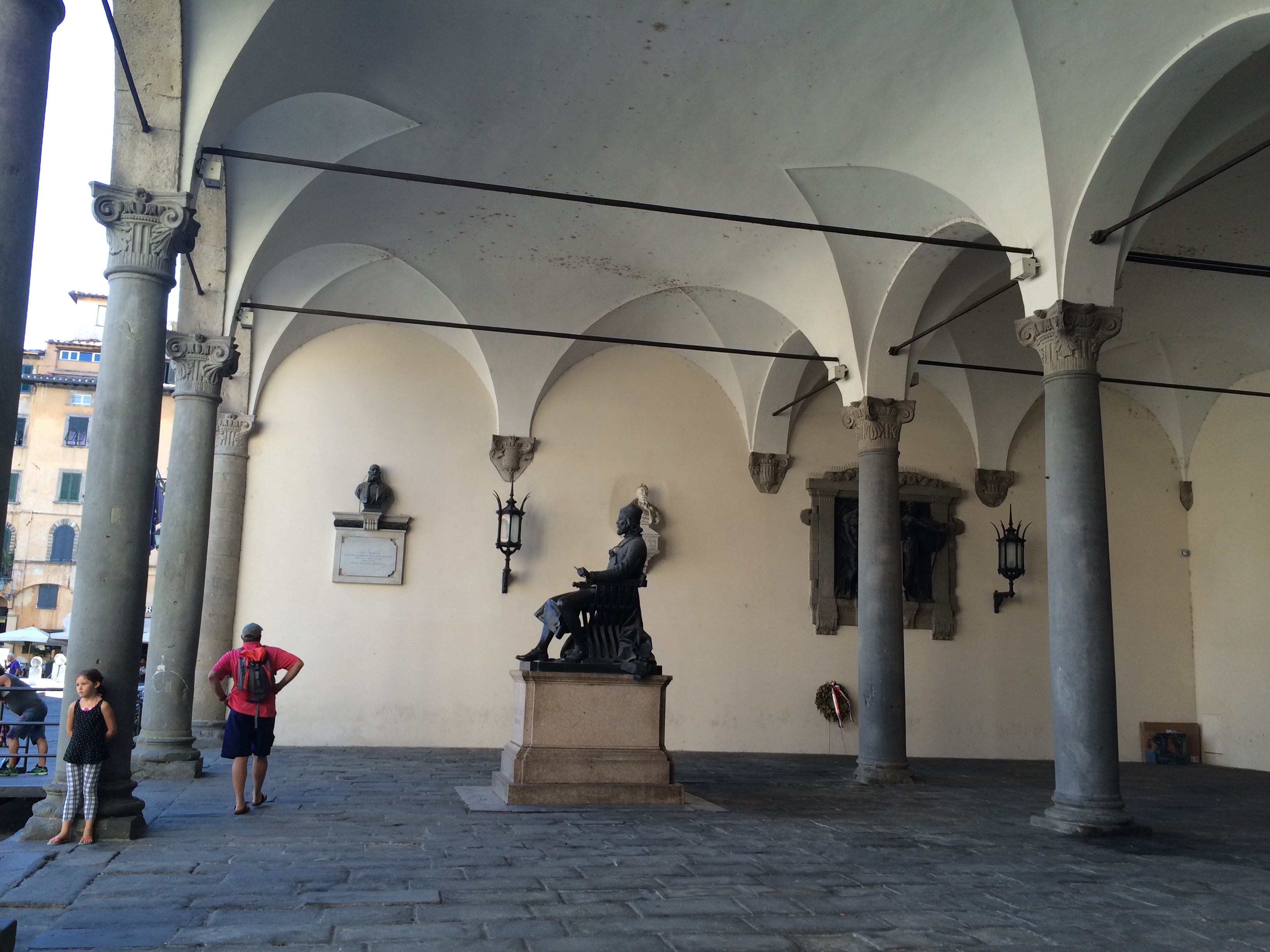
There is no denying why so many people go on and on about Tuscany. It is beautiful, and we had a really lovely time. Anton says it’s definitely somewhere we can return.
In closing, here is a quick travellers guide to Italy from my perspective (a thirty-something wife and mother of 2 young girls):
- Always keep a handful of spare 1euro coins on your person to pay for toilets. (Don’t convert that to ZA rands. Life is too short.)
- Most historic buildings and churches require you to pay for entrance. I realised that wasn’t going to be worth it with La Petite Monstre in tow, so we took hundreds of photos of the outside of these buildings. One day we may get inside…
- I realised too late that in order to see The Last Supper, which is in Milan, I needed to book my tickets in March. Don’t make the same mistake.
- Avoid taking your car into a city. Find a parking place within a decent walking distance- they’re normally cheaper for parking, and you don’t need to fight with cyclists and pedestrians. And narrow roads.
- 2.80eu is a standard price for gelato. They are quite rich, but very tasty. Another option is fresh ‘slush puppies’- mint; lemon and watermelon were popular this season. (I couldn’t stomach the watermelon after mampoer-watermelon cocktails all those years ago.)
- A GPS is a necessity. However, you need to research destinations before you rely on the GPS. We spent 45 minutes driving around while trying to figure out how to ask the Garmin to take us to a wine estate. FYI- Fattoria is the term you require for this exercise.
- Don’t even TRY look for somewhere to eat after 2pm if you’re not in a city. Ensure you have finalised lunch plans by 1pm.
So with about 1000 European kilometres under our belts, over 150 tunnels on the road, bottles of Tuscan wine, and loads of happy family time, that was our week in Tuscany.
Life is slowly returning to normal. School is in full swing. Dad is en-route to Santiago, Spain.
What will be my next challenge?
Au revoir, et a tout a l’heure.
Xxx
 Pinot, Bretzels, and Cathedrals
G day
After being behind 7 dearest news letters I decided to take some private time off work and read all of them
Thank you for writing so inspirational and keeping me in news letter âº
Im so busy at the moment donât know were is what.
Any way send regard to Anton
[cid:image001.png@01D02996.90FAC090]
Jean van Staden | National exec Chef | Chartwells | http://www.compass-group.co.za
O. 011.209.2400 | C. 082.376.1617
170 Grosvenor Road | Bryanston | Sandton | Private Bag X54 | Bryanston | 2021
September safety topic: Maintenance and Reporting of Faulty Equipment: Slogan: âSafety does not come instantly, you should implement it consistentlyâ
The purpose of the safety topic is to raise the employeeâs awareness on the importance of maintaining and reporting of faulty equipment.
We all work with various pieces of equipment or tools every day. Familiarity can lead to complacency. Faulty equipment, tools or using them incorrectly can lead to accidents resulting in injuries and produce poor quality work. Taking reasonable care of your own Health and Safety, means keeping equipment and tools in good condition and using them properly. Most work equipment can become worn or damaged over time which may render it unsuitable or unsafe for use. Always inspect and report faults on the defective equipment to your line manager/supervisor.